If you’re looking for backlink basics, finding truly good backlinks for SEO can feel like navigating a constantly shifting landscape. Backlinks remain a core signal for search engines like Google, even in 2026. However, what constitutes a “good” backlink has evolved significantly from the early days of quantity over quality. Today, it’s about a nuanced understanding of relevance, authority, trust, and the natural ecosystem of the web. This guide cuts through the noise, providing a professional, practical perspective on building a robust and effective backlink strategy for your U. S.-based business.
The Enduring Importance of Good Backlinks in 2026
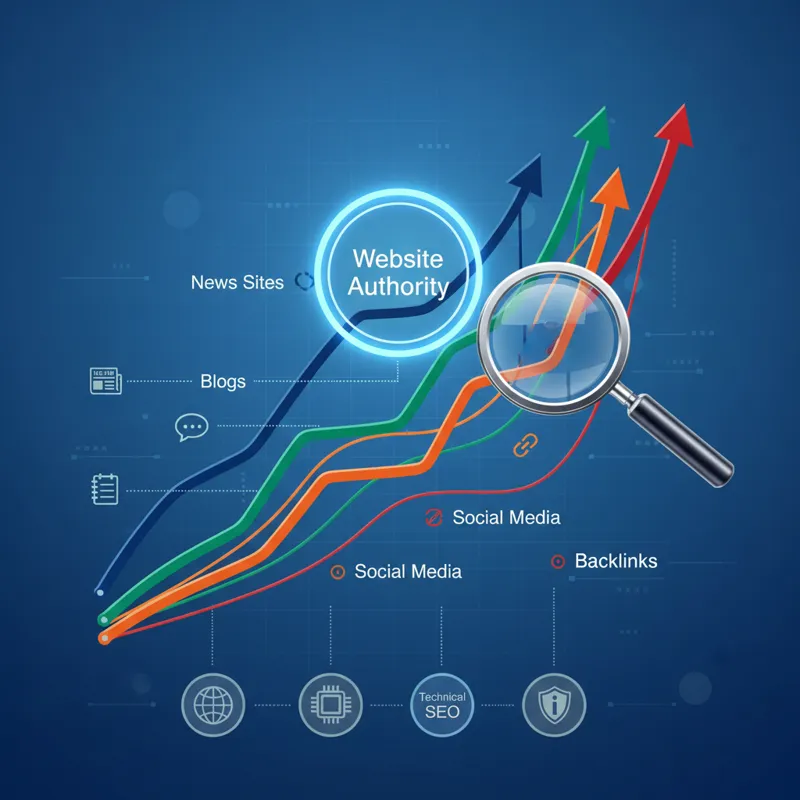
In 2026, the question “do backlinks still help SEO?” gets a resounding yes, but with critical caveats. Backlinks act as votes of confidence from one website to another. Think of them as digital endorsements. When a reputable site links to your content, it signals to search engines that your page is valuable, trustworthy, and authoritative on a particular topic.
Google’s algorithms, while increasingly sophisticated, still rely heavily on these external signals. They help Google understand not just what your content is about, but how other websites perceive its quality and relevance. This directly impacts your organic search rankings. The link juice passed from a strong domain can dramatically boost your page’s visibility.
The critical distinction now is that not all votes are equal. A link from an obscure, low-quality, or irrelevant website can be worthless at best, and detrimental at worst. Search engines are smart enough to differentiate between naturally earned endorsements and manipulative link schemes. Understanding this difference is fundamental to any successful backlink strategy today.
Defining a “Good” Backlink: More Than Just a Link
A Venn diagram with three overlapping circles. One circle is labeled “Relevance,” another “Authority,” and the third “Trust.” The overlapping center where all three meet is labeled “Good Backlink.” Surrounding the diagram are small icons representing a high-quality blog post, a respected industry publication, and a secure website lock.
What makes a backlink truly “good” for SEO in 2026? It’s a combination of several factors, each playing a crucial role in how search engines interpret its value. Ignoring any of these components means you’re likely pursuing links that offer minimal benefit, or worse, put your site at risk.
Relevance: Context is King
A good backlink originates from a website or page that is topically related to yours. If you run a gardening blog, a link from a nursery website or a gardening forum is highly relevant. A link from a car dealership, however, holds little contextual value, even if the site is authoritative.
Search engines evaluate the content surrounding the link. Is it natural? Does the anchor text (the clickable words) make sense within the sentence? Contextual relevance ensures the link passes meaningful authority and doesn’t look like an arbitrary insertion. This is about establishing semantic connections.
Authority: The Weight of the Source
The authority of the linking domain is paramount. Metrics like Domain Authority (DA) from Moz or Domain Rating (DR) from Ahrefs provide a useful, though not perfect, proxy for a website’s overall strength and influence. A link from a well-established, highly-ranked website carries significantly more weight than one from a brand-new or little-known site. These are often referred to as high DA links or authoritative backlinks.
Google doesn’t explicitly use DA or DR, but its own internal algorithms assess a site’s authority based on its age, backlink profile, content quality, and user engagement. A link from an industry leader, a university (.edu), or a government site (.gov) is often among the strongest backlinks you can acquire due to their inherent authority and trust.
Trust: Avoiding the Bad Neighborhoods
Trust goes hand-in-hand with authority. A linking site needs to be perceived as trustworthy by search engines. This means it shouldn’t have a history of spam, manipulative SEO practices, or low-quality content. A high spam score on a linking domain is a major red flag.
Google’s algorithms are constantly updated to identify and devalue links from “bad neighborhoods”—sites engaged in black-hat tactics. A link from such a site can actually harm your rankings, signaling to Google that you might be attempting to manipulate results.
Diversity: A Natural Backlink Profile
A natural backlink profile isn’t homogenous. It features a variety of linking domains, anchor texts, and link types (e.g., editorial, directory, forum). Too many links from the same type of source, or with identical anchor text, can look suspicious.
A diverse profile includes links from different kinds of websites (blogs, news outlets, industry portals), uses a mix of anchor text (branded, exact match, partial match, naked URL), and varies in placement (in-content, footer, sidebar). This diversity signals organic growth and broad recognition.
Placement: Editorial and In-Content Links
The best backlinks are typically editorial in nature and placed naturally within the main content of a page. This means the link was given because the content genuinely referenced your site as a valuable resource. Links buried in footers or sidebars, or those clearly marked as sponsored or advertisements, typically pass less SEO value. Editorial links are the gold standard for getting relevant backlinks that drive real results.
Types of Good Backlinks for SEO in 2026
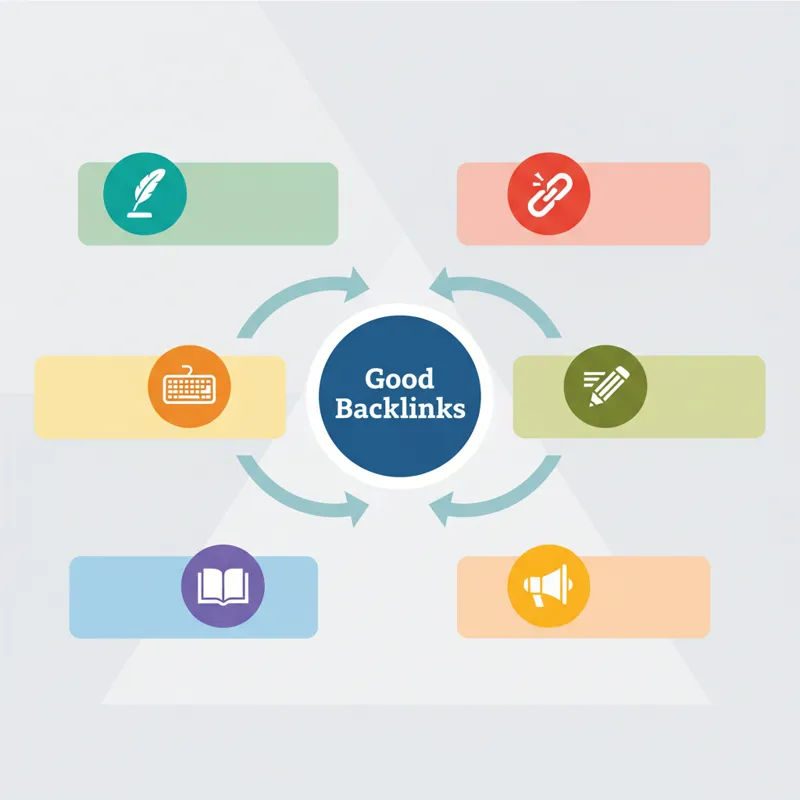
A visually organized flow chart or infographic showing different types of good backlinks branching out from a central “Good Backlinks” node. Each branch has an icon and a brief description: “Editorial Links” (quill pen), “Guest Posting” (keyboard), “Resource Page Links” (open book), “Broken Link Building” (broken chain link), “Niche Edits” (pencil editing text), “Digital PR” (megaphone).
Understanding the characteristics of a good backlink leads us to the most effective types to pursue. Here are some of the strongest backlinks you can acquire:
1. Editorial Links (Earned Mentions)
These are the holy grail of backlinks. An editorial link occurs when another website naturally references your content because it finds it valuable, informative, or insightful. This might be a journalist citing your research, a blogger recommending your guide, or an industry expert referencing your unique perspective. These are organic, contextually relevant, and pass significant authority.
2. Guest Posting (Strategic & High-Quality)
Guest posting, when done correctly, remains a powerful strategy. It involves writing an article for another website in your niche, including a link back to your own site within the content. The key is quality and relevance. Focus on highly authoritative sites that genuinely accept guest contributions, offer real value to their audience, and align perfectly with your topic. Avoid any site that appears to be a link farm or offers “write for us” pages with low editorial standards. This is where a careful backlink blogger approach is crucial.
3. Resource Page Links
Many websites curate “resources” pages, listing valuable external links relevant to their audience. Identifying these pages in your niche and proposing your high-quality content as a valuable addition can be an effective way to get free backlinks. Your content must genuinely enhance their resource list.
4. Broken Link Building
This tactic involves finding broken links on other websites, creating superior content that addresses the topic of the broken link, and then reaching out to the website owner to suggest replacing their broken link with a link to your new, updated content. It’s a win-win: they fix a problem on their site, and you earn a relevant backlink.
5. Niche Edits (Curated Links)
A niche edit (or “curated link”) refers to placing a link to your content within an existing, already indexed piece of content on another website. This isn’t about altering someone else’s content; it’s about a website editor or owner agreeing to add your link to an older article because your content provides additional value or updates the information. Like guest posting, quality and relevance are key, and the placement must be natural and editorially justified.
6. Digital PR Mentions
Modern digital PR involves creating newsworthy content, data, or campaigns that attract media attention, resulting in mentions and links from news outlets, industry publications, and influential blogs. This often generates many of the most effective backlinks due to the inherent authority of news sites.
7. Directory & Citation Links (Local SEO Specific)
While less impactful for general SEO, reputable industry-specific directories and local business citations (like Yelp, Google Business Profile, etc.) are crucial for local SEO. They help establish your business’s presence and legitimacy within a specific geographic area. Generic, spammy web directories, however, are best avoided.
The Mechanics of Link Acquisition: Strategies for 2026
Acquiring quality relevant backlinks in 2026 isn’t about shortcuts; it’s about strategic effort and providing value. Here are the actionable strategies:
Content Marketing: Creating Linkable Assets
The foundation of any good backlink strategy is exceptional content. People link to content they find useful, informative, entertaining, or authoritative.
Create:
-
- In-depth guides: Comprehensive articles that answer all questions on a topic.
- Original research & data: Studies, surveys, or unique data sets that others will want to cite.
- Infographics & visuals: Easily digestible, shareable content that summarizes complex information.
- Tools & calculators: Interactive resources that provide immediate value.
- Ultimate lists: Curated resources that save people time.
High-quality content is what genuinely helps you earn free relevant backlinks over time.
Digital PR & Outreach: Building Relationships
Once you have linkable assets, you need to promote them. Digital PR focuses on getting your content in front of journalists, bloggers, and influencers who might want to share or cite it.
This involves:
-
- Targeted outreach: Identifying relevant websites and individuals.
- Personalized pitches: Explaining why your content is valuable to their audience.
- Relationship building: Fostering connections, not just asking for links.
Competitor Backlink Analysis
One of the most efficient ways to identify potential link opportunities is to analyze your competitors’ backlink profiles. Tools like Ahrefs, Semrush, or Moz let you find competitor backlinks. Look for:
-
- Common linking domains: If a site links to multiple competitors, it might link to you too.
- Resource pages: See where competitors are listed.
- Guest post opportunities: Identify sites where they’ve published guest posts.
This intel can inform your outreach strategy and highlight domains that are open to linking within your niche. To saber backlinks de una web is to understand its entire linking ecosystem.
Broken Link Building in Practice
Use browser extensions or SEO tools to scan target websites for broken external links. Once you find one:
-
- Create a piece of content that improves upon what the broken link offered.
- Reach out to the website owner, politely inform them of the broken link, and suggest your new content as a replacement.
This is a labor-intensive but highly effective method for acquiring high-quality, relevant links.
Partnerships and Collaborations
Look for non-competing businesses or influencers in your industry for collaborative content, joint webinars, or mutual promotions. These can naturally lead to editorial mentions and valuable backlinks from trusted sources.
Assessing Backlink Quality and a Healthy Backlink Profile
Understanding your own what is a backlink profile is just as important as building it. A backlink profile is the sum total of all the links pointing to your website. Regular audits are crucial to ensure its health.
Tools for Analysis
Use professional SEO tools to:
-
- Track new and lost links: Monitor changes to your profile.
- Analyze anchor text distribution: Ensure a natural, varied mix.
- Check domain authority/rating of linking sites: Prioritize efforts on high-impact links.
- Identify potential toxic links: Look for sites with high spam scores or questionable relevance.
Identifying and Disavowing Toxic Links
Toxic links are those that come from low-quality, spammy, or irrelevant websites, often acquired through black-hat tactics. These can harm your SEO performance. If you identify such links, especially after a manual penalty or a sudden drop in rankings, you might need to use Google’s Disavow Tool. This tells Google to ignore specific links when evaluating your site. Use this tool judiciously, as improper use can also negatively impact your rankings.
Things People Usually Miss About Backlinks in 2026
Many businesses focus purely on external links, missing some crucial elements that define truly strongest backlinks and a robust SEO strategy.
Quality Over Quantity is Still Paramount
While often repeated, this truth is frequently overlooked. Five high-authority, relevant editorial links are infinitely more valuable than 50 low-quality, spammy directory submissions. Focus your resources on earning fewer, higher-impact links. Google’s algorithms are adept at identifying and ignoring, or even penalizing, low-quality link schemes.
The Role of Internal Linking
External backlinks pass “link juice” to your site, but internal links distribute that juice and authority throughout your own domain. A strong internal linking structure helps search engines discover your content, understand its hierarchy, and ensures important pages receive the authority they deserve. It also improves user experience.
It’s Not Just About Links: Content and User Experience Matter
Even the best backlinks won’t save a website with poor content or a terrible user experience. Google prioritizes content that satisfies user intent and provides a positive experience. If users bounce quickly or find your content unhelpful, backlinks alone won’t sustain your rankings. Links act as a signal to bring users to your site; your site’s quality then keeps them there.
The Long-Term Play
Building a powerful backlink profile is a marathon, not a sprint. Expect to see results over months, not days or weeks. Consistent effort, creating valuable content, and genuine outreach build sustainable authority. Short-term gains from manipulative tactics are almost always followed by penalties.
Avoiding Bad Backlink Practices
The pursuit of good backlinks for SEO can sometimes lead people down risky paths. It’s critical to avoid tactics that Google explicitly warns against.
Buying Links (The Wrong Way)
Google’s guidelines strictly prohibit buying or selling links that pass PageRank. While some legitimate sponsorships or advertisements might include links, these should ideally be “nofollow” or “sponsored” to indicate they aren’t editorial endorsements meant to manipulate search rankings. Direct payment for dofollow links, especially at scale, can lead to severe penalties.
Link Farms, PBNs, and Comment Spam
These are examples of manipulative schemes designed solely to inflate link counts.
-
- Link farms: Networks of low-quality sites created solely to link to each other.
- Private Blog Networks (PBNs): Networks of expired domains or privately owned sites used to funnel link equity to a “money site.” Google is highly effective at identifying and penalizing PBNs.
- Comment spam: Leaving irrelevant comments on blogs or forums purely to drop a link.
These tactics are outdated and extremely risky in 2026.
Over-Optimization of Anchor Text
While important, overusing exact-match anchor text (e.g., repeatedly linking “best blue widgets” to your blue widgets page) can look unnatural and manipulative. A healthy backlink profile features a diverse range of anchor texts, including branded terms, naked URLs, partial matches, and generic calls to action.
Building a Strategic Backlink Plan for Your Business
A successful backlink strategy isn’t haphazard; it’s a deliberate, ongoing process.
1. Define Your Goals
What do you want to achieve? Higher rankings for specific keywords? Increased organic traffic? Improved domain authority? Clear goals guide your strategy.
2. Audit Your Current Profile
Understand your starting point. What links do you already have? Are they good? Are there any toxic links you need to address? This is essential for understanding your current backlink profile.
3. Identify Opportunities
Based on competitor analysis, keyword research, and your unique content assets, pinpoint specific websites or types of content that are most likely to link to you. This might involve creating content specifically designed to attract links.
4. Execute Your Strategy
Implement your chosen link-building tactics consistently. This might involve dedicating resources to content creation, outreach, or digital PR. Remember to get relevant backlinks and not just any link.
5. Measure and Refine
Track your progress. Are you acquiring quality links? Are your target keywords improving? Adjust your strategy based on what’s working and what isn’t. SEO is an iterative process.
Frequently Asked Questions About Backlinks
You’ve got questions about the importance of backlinks and how they affect your search presence. Let’s tackle some common ones.
Do backlinks still help SEO in 2026?
Absolutely. While Google’s algorithms have evolved, backlinks remain a fundamental ranking factor. They signal authority, trust, and relevance, which are crucial for search engine visibility. However, the emphasis is heavily on quality and natural acquisition.
What are the 3 types of backlinks?
When discussing the attribute of a link, the primary types are:
-
- Dofollow Links: These are standard links that pass “link juice” and authority to the linked page, influencing SEO.
- Nofollow Links: These links include a rel=”nofollow” attribute, telling search engines not to pass authority or follow the link. They generally don’t directly impact SEO but can still drive referral traffic.
- UGC & Sponsored Links: Google introduced rel=”ugc” for user-generated content (like forum comments) and rel=”sponsored” for paid or sponsored links. These offer more granular control than a generic nofollow, giving Google more context.
Some also categorize based on source, like editorial, directory, or guest post links.
How can I get free good backlinks?
You earn free backlinks by creating exceptionally valuable content that others naturally want to reference. This includes original research, comprehensive guides, unique tools, or engaging visuals. Digital PR and outreach can help get that content discovered, leading to organic mentions. Broken link building is another way to earn them.
Are high DA links always good?
Not necessarily. While a high Domain Authority (DA) or Domain Rating (DR) is often a good indicator of a strong linking source, relevance and trust are equally important. A high DA link from a completely irrelevant or spammy-looking site can still be detrimental. Always assess the linking page’s contextual relevance and the overall quality of the domain, not just a single metric.
How long does it take for backlinks to work?
The impact of good backlinks isn’t immediate. It can take weeks or even months for search engines to discover new links, crawl the linked pages, and re-evaluate your site’s authority. The speed of impact also depends on the authority of the linking site, the overall competitiveness of your niche, and the strength of your existing backlink profile.
Can bad backlinks hurt my SEO?
Yes, bad backlinks can definitely hurt your SEO. Links from spammy sites, link farms, or those acquired through manipulative tactics can lead to penalties from Google, resulting in significant drops in search rankings or even de-indexing. Regular auditing of your backlink profile and disavowing toxic links are crucial defensive measures.
In 2026, building good backlinks for SEO remains a cornerstone of organic visibility. It’s a complex, ever-evolving discipline that demands patience, ethical practices, and a deep understanding of what truly signals authority and trust to search engines. By focusing on creating valuable content, engaging in strategic outreach, and meticulously maintaining a healthy backlink profile, U. S. businesses can build a sustainable foundation for long-term search success.