
In the dynamic world of search engine optimization, if you’re looking for backlink basics, understanding and acquiring high DA links remains a cornerstone strategy for digital success. As we navigate 2026, the pursuit of authoritative backlinks isn’t just about boosting a number; it’s about building genuine web authority and trust with search engines like Google. While metrics like Domain Authority (DA) are third-party indicators, they often correlate strongly with the kind of powerful, credible links that significantly impact your search rankings and drive sustainable organic traffic. This guide will walk you through what high DA links truly mean in today’s SEO landscape, why they’re so valuable, and how ethical, white-hat strategies can help your business secure them effectively.
Understanding “High DA” in 2026: More Than Just a Metric
The term “high DA links” gets thrown around a lot in SEO circles. Many people chase it as if it’s the ultimate goal, but in 2026, a nuanced understanding is more critical than ever. Domain Authority (DA) is a proprietary metric developed by Moz, designed to predict how likely a website is to rank in search engine results. It operates on a scale from 1 to 100, with higher scores indicating a greater likelihood of ranking. While it’s a helpful proxy, it’s not a direct signal Google uses.
What is Domain Authority (DA) and Why Does It Matter?
Domain Authority (DA) estimates a website’s overall strength and relevance based on various factors, including the number of backlinks, the quality of those links, and other SEO metrics. Moz calculates this using a machine learning model, and it’s constantly updated. Think of it as a speedometer for a car; it gives you a good idea of how fast you’re going, but it doesn’t tell you about the engine’s health or the driver’s skill.
In practice, a site with a DA of 70+ is generally considered highly authoritative. These are often well-established news outlets, government websites, major industry publications, or long-standing blogs. Acquiring a link from such a site signals to search engines that your content is credible and trustworthy. It’s an endorsement from a respected peer in the digital world.
It matters because, historically, sites with strong backlink profiles tend to perform better in organic search. DA helps us quickly identify potential linking partners that possess many of these “strong backlink profile” characteristics, giving us a shortcut to assess their perceived authority.
Beyond DA: The Real Signals of Authority
While DA provides a quick benchmark, smart SEO professionals in 2026 look beyond this single number. Google’s algorithms don’t care about Moz’s DA score directly. They care about actual authority, relevance, and trust signals. These include:
-
- Organic Traffic Volume: Does the site actually get significant, relevant search traffic? High traffic often indicates a strong user experience and valuable content, which Google loves.
- Engagement Metrics: How long do visitors stay on the site? Do they interact with content? High engagement signals quality.
- Relevance to Your Niche: A link from a site with a DA of 50 that’s highly relevant to your industry is often more valuable than a link from a DA 90 site with no topical connection.
- Quality of Content: Is the linking site publishing well-researched, original, and helpful content consistently? Spammy sites, regardless of DA, offer little value.
- Editorial Standards: Does the site have a clear editorial process? Is it prone to publishing low-quality or AI-generated spam?
- Backlink Profile of the Linking Site: A site with a high DA but a profile full of spammy or low-quality outbound links isn’t a good partner.
Focusing on these deeper signals ensures you’re pursuing truly valuable white hat link building opportunities, rather than just chasing a metric that can sometimes be manipulated or misleading.
The Tangible Benefits of Acquiring High DA Links
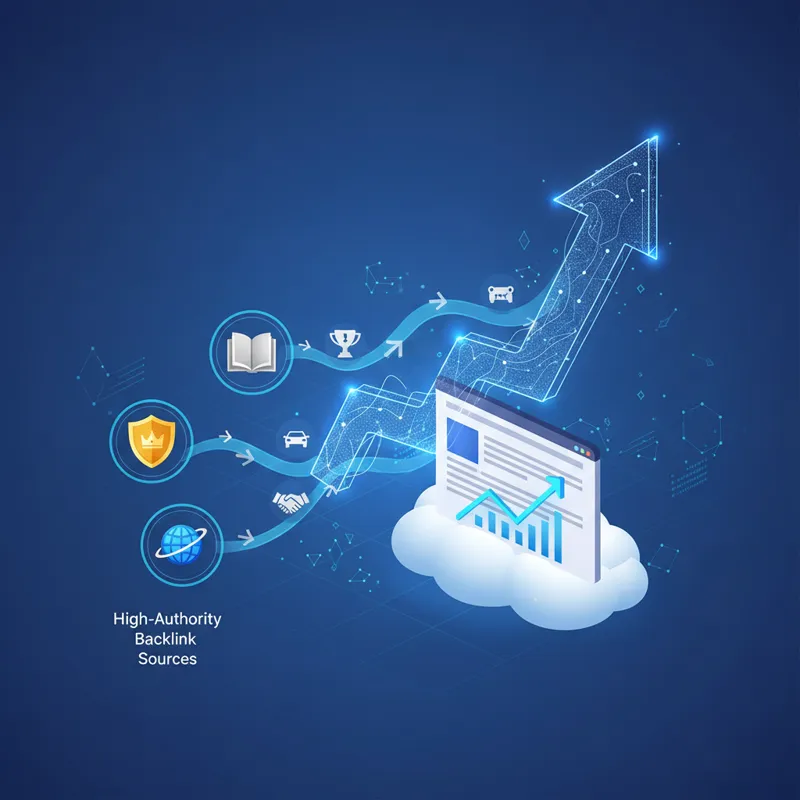
A visual representation of a website’s upward trajectory, with arrows indicating increased rankings, traffic, and credibility flowing from multiple high-authority backlink sources.
Securing links from authoritative websites isn’t just an SEO checkbox; it’s a strategic move that yields several profound benefits for your online presence. These advantages compound over time, building a robust foundation for long-term digital success.
Improved Search Engine Rankings
This is often the most immediate and sought-after benefit. When a reputable site links to yours, it’s essentially casting a vote of confidence. Search engine algorithms interpret these votes as indicators of your site’s credibility and value. The more high-quality, relevant votes you accumulate, the more likely your pages are to rank higher for target keywords. This isn’t an overnight switch, but a consistent effort to earn high DA links will invariably push your content up the SERPs.
Increased Organic Traffic and Brand Visibility
Higher rankings naturally lead to more organic traffic. When your content appears on the first page of Google, more people see it, click on it, and visit your site. This direct traffic is highly valuable because it comes from users actively searching for information, products, or services related to your business. Additionally, being linked to by prominent sites can expose your brand to their audience, driving referral traffic and increasing overall brand awareness and recognition.
Enhanced Credibility and Trust
Beyond algorithmic benefits, high DA links bestow a halo of credibility on your brand. When users see your site mentioned or linked to by well-known industry leaders, news organizations, or educational institutions, it instantly elevates your perceived authority. This trust translates into better conversion rates, stronger customer loyalty, and a more respected presence in your niche. It signals to both search engines and human users that your business is a legitimate, reliable source of information or services.
Ethical Strategies for Earning High DA Links in 2026
A flowchart illustrating various ethical link building strategies like content creation, outreach, and relationship building, all leading to “High DA Backlinks.”
Forget shortcuts and shady tactics. In 2026, Google’s algorithms are more sophisticated than ever at identifying and penalizing manipulative link schemes. Sustainable, impactful link building centers on ethical, value-driven strategies. Here’s how businesses can genuinely earn high DA links:
Crafting Link-Worthy Content (Content Marketing Foundation)
At the heart of any successful link building campaign is exceptional content. Nobody links to mediocrity. To attract free relevant backlinks, you need to create resources that are:
- Data-Rich: Original research, comprehensive studies, insightful reports, or unique data visualizations are highly linkable.
- Problem-Solving: Content that clearly addresses common pain points or answers complex questions becomes an invaluable resource.
- Evergreen: Content that remains relevant over time, requiring minimal updates, can continuously attract links.
- Visually Appealing: Infographics, interactive tools, and high-quality videos can significantly boost shareability and link potential.
Invest in content that solves real problems or provides unique insights for your target audience. This is the magnetic force that naturally attracts links.
Strategic Guest Posting: Real Value, Not Just a Backlink
Guest posting is far from dead, but its approach has evolved. In 2026, it’s about contributing genuinely valuable articles to relevant, authoritative websites in your niche. Your goal isn’t just the link, but to share expertise, build brand awareness, and contribute to the broader industry conversation. When targeting sites for guest posts:
-
- Look for sites with a strong audience overlap and high editorial standards.
- Propose unique, well-researched topics that aren’t already covered extensively on their blog.
- Ensure your article offers deep insights, practical advice, or a fresh perspective.
A well-placed guest post on a high DA site can significantly boost your authority. If you’re looking for opportunities, consider sites that accept blogger guest post submissions but vet them rigorously.
Resource Page Link Building: A Consistent Approach
Many high-authority websites maintain “resources” or “links” pages that curate valuable external content for their audience. Identifying these pages and pitching your relevant, high-quality content as a valuable addition can be an effective tactic. This requires:
-
- Finding resource pages in your niche using specific search queries (e.g., “industry + resources,” “keyword + useful links”).
- Analyzing the existing links on these pages to ensure your content is a genuinely good fit.
- Crafting a concise, polite outreach email explaining why your resource would be a valuable addition to their page.
This strategy, often referred to as resource link building, is a classic for a reason: it’s mutually beneficial. You get a link, and they enhance their resource page.
The Power of Digital PR and Media Outreach
Digital PR involves generating media coverage and mentions for your brand on high-authority news sites, industry publications, and influential blogs. This isn’t just about links; it’s about legitimate visibility and brand building. Strategies include:
-
- Conducting original research: Create compelling data that journalists and bloggers will want to cite.
- Issuing press releases: Announce significant company news, product launches, or events.
- Expert commentary: Position yourself or your team as an expert source for journalists covering relevant topics.
- Creating shareable assets: Infographics, interactive tools, or unique data visualizations often get picked up by media.
A successful digital PR campaign can result in numerous powerful editorial links from very high DA domains like Forbes or major news outlets. For example, contributing expert commentary to a relevant financial article on Forbes could lead to a valuable backlink.
Broken Link Building: Repairing the Web, Earning Links
Broken link building is an ethical and effective strategy where you find broken links (404 errors) on authoritative websites, create superior content to replace the missing resource, and then inform the webmaster about the broken link, suggesting your content as a replacement. This is a win-win:
-
- The webmaster fixes a broken link on their site, improving user experience.
- You earn a valuable backlink to your relevant content.
Tools like Ahrefs or Semrush can help you find broken links on target websites. This method is often overlooked but highly effective for securing high DA links.
Building Relationships: Networking for Link Opportunities
At its core, link building is about relationships. Attending industry events, participating in online forums, engaging on social media, and genuinely connecting with other professionals in your niche can naturally lead to link opportunities. When you’re a recognized and respected voice in your community, people are more likely to reference and link to your content organically. This also applies to internal efforts, like collaborating with content creators who have strong networks.
What Most People Get Wrong About High DA Links
Even with the best intentions, several common pitfalls can derail your efforts to acquire valuable high DA links. Understanding these mistakes is crucial for developing a truly effective and sustainable strategy.
Focusing Solely on the DA Score
This is perhaps the biggest mistake. As discussed, DA is a helpful metric, but it shouldn’t be the only factor you consider. A site with a DA of 60 that is highly relevant to your business and drives significant organic traffic is often far more valuable than a DA 90 site with no topical connection, low traffic, or a questionable backlink profile. Blindly chasing the highest DA numbers can lead to irrelevant links that provide little to no SEO benefit and can even be detrimental if the site is spammy.
Neglecting Relevance and Context
A link’s power comes not just from the authority of the linking domain, but also from its relevance to your content and industry. A backlink about dog grooming from a high DA tech blog is unlikely to move the needle for your pet supply store. Google’s algorithms are smart enough to understand topical relevance. A link embedded within a contextually relevant article, using natural anchor text, from a site within your niche, carries far more weight than an arbitrary link on an unrelated site.
Falling for Link Schemes and PBNs
The allure of quick results can sometimes lead businesses down dangerous paths, like buying high DA PBN links. Private Blog Networks (PBNs) are networks of websites created solely to build links to other sites. While they might artificially inflate metrics like DA, Google explicitly considers them a violation of their Webmaster Guidelines. Getting caught participating in PBNs can result in severe penalties, including manual actions that tank your rankings and require significant effort to recover. Always prioritize ethical, white-hat strategies; any claim to sell “instant high DA links” should be a major red flag. If you are curious about these practices, you can learn more about the risks associated with buy high da pbn links, but be warned that Google strongly advises against them.
Overlooking Anchor Text Diversity
Anchor text is the clickable text in a hyperlink. While it’s natural to want to use your target keywords, over-optimizing anchor text with exact-match keywords can look unnatural and spammy to Google. A healthy backlink profile features a diverse range of anchor texts, including:
-
- Brand names (e.g., “RankWeb”)
- Naked URLs (e.g., “www.example.com”)
- Generic phrases (e.g., “learn more,” “this article”)
- Partial-match keywords (e.g., “SEO strategies”)
- Exact-match keywords (used sparingly and naturally)
Focus on natural, descriptive anchor text that provides context to the user, rather than trying to stuff keywords.
How to Evaluate a High DA Link Opportunity (Beyond the Numbers)
A true professional looks beyond a single metric. When you identify a potential site for a backlink, perform a comprehensive evaluation. This due diligence ensures you’re investing your time and resources into opportunities that will genuinely benefit your SEO. Here’s what to look for:
Traffic and Engagement Metrics
Does the website receive a significant amount of organic traffic? Tools like Semrush or Ahrefs can provide estimates. A high DA site with minimal organic traffic might indicate that its authority isn’t translating into real user engagement. Look for sites that consistently attract visitors who spend time on their pages. High traffic often correlates with better ranking ability and a more engaged audience for your link to reach.
Site Design and User Experience
A well-designed, user-friendly website signals professionalism and attention to detail. Is the site mobile-responsive? Is it easy to navigate? Are there intrusive ads or pop-ups that degrade the user experience? Google prioritizes user experience, and linking from sites that offer a poor experience can subtly diminish the perceived quality of your own site.
Content Quality and Editorial Standards
Scrutinize the quality of the content on the potential linking site. Is it well-written, original, and informative? Are articles frequently updated and free of grammatical errors? Does the site publish content regularly, or is it stagnant? A site that consistently publishes high-quality content demonstrates ongoing authority and a commitment to its audience, making a link from it far more valuable.
Backlink Profile of the Linking Site Itself
Just as you want a strong backlink profile, so too should your target linking site. Use an SEO tool to analyze its own inbound and outbound links. Does it primarily link to other authoritative, relevant sites, or is it filled with spammy, low-quality outbound links? Are its inbound links from reputable sources? A high DA site that links excessively to irrelevant or low-quality domains might be engaging in questionable practices, which you want to avoid associating with.
Measuring Success: Tracking Your High DA Link Building Efforts
Acquiring high DA links is only half the battle; tracking their impact is essential to refine your strategy and demonstrate ROI. In 2026, robust analytics and reporting are standard for any serious SEO campaign. Here’s how you can measure the success of your efforts:
-
- Monitor Keyword Rankings: Keep a close eye on the organic search rankings for your target keywords. Tools like Google Search Console, Semrush, or Ahrefs allow you to track position changes over time. You should ideally see an upward trend for pages that receive high DA links.
- Track Organic Traffic: Observe changes in organic traffic to your website and specific linked pages using Google Analytics. Look for increases in direct traffic, as well as traffic driven by improved search visibility.
- Analyze Referring Domains: Regularly check your backlink profile. Confirm that new high DA links are being indexed and recognized by search engines. Tools provide detailed reports on new backlinks, their DA/DR, and the anchor text used.
- Assess Domain Authority/Rating Changes: While not a Google metric, monitor your own website’s Domain Authority (Moz) or Domain Rating (Ahrefs). A consistent increase often indicates a successful link building campaign.
- Evaluate Conversion Rates: Ultimately, traffic and rankings lead to business goals. Track how your conversion rates (sales, leads, sign-ups) are impacted after acquiring significant high DA links.
Regular reporting helps you understand which link building tactics are most effective and allows you to adapt your strategy for continuous improvement.
Frequently Asked Questions About High DA Links
Is Domain Authority a Google Ranking Factor?
No, Domain Authority (DA) is a third-party metric created by Moz, not by Google. Google’s algorithms do not directly use DA (or similar metrics like Domain Rating from Ahrefs) to rank websites. However, DA is a useful predictive metric because it correlates with many factors that Google does consider, such as the overall strength and quality of a website’s backlink profile.
How Long Does It Take for High DA Links to Impact SEO?
The impact of high DA links isn’t instantaneous. It can take weeks or even months for Google to re-crawl and re-evaluate your site’s authority after acquiring new links. Factors influencing this timeline include the crawl budget of the linking site, how frequently Google indexes new content, and the competitive landscape of your keywords. Typically, you might start seeing subtle improvements within 1-3 months, with more significant changes over 3-6 months.
Are Nofollow Links from High DA Sites Still Valuable?
Yes, absolutely. While nofollow links traditionally instructed search engines not to pass “link equity,” Google announced in 2019 that nofollow, sponsored, and UGC attributes are now treated as “hints.” This means Google might still consider them for ranking purposes if it deems them valuable. Beyond SEO, nofollow links from high DA sites can drive referral traffic, enhance brand visibility, and improve overall brand credibility, all of which are valuable business outcomes.
Should I Disavow Low Quality Links if I’m Chasing High DA?
If you’re focused on building high DA links, you should also be mindful of low-quality, spammy links pointing to your site. While Google is generally good at ignoring harmful links, if you have a significant number of manipulative or clearly artificial links that could lead to a manual action, then using the Google Disavow Tool might be prudent. However, for most sites, Google advises against disavowing unless you’re certain of a negative SEO attack or have received a manual penalty notice.
What’s a good DA score to aim for?
There isn’t a single “good” DA score to aim for, as it’s relative to your industry and competitors. Generally, a DA score above 40 is considered respectable, and above 60 is excellent. For newer sites, aiming for a consistent increase, even by a few points, is a strong indicator of progress. Focus more on acquiring relevant, high-quality links rather than just hitting an arbitrary DA number.
The landscape of SEO in 2026 continues to emphasize genuine authority, relevance, and a superior user experience. Chasing high DA links blindly is a fool’s errand. Instead, by focusing on creating exceptional content, building authentic relationships, and deploying ethical link acquisition strategies, businesses can genuinely earn the powerful endorsements that drive significant improvements in search rankings, organic traffic, and brand credibility. High DA links are not just about a score; they are a testament to your online presence’s real value.