If you’re looking for good backlinks for SEO, understanding the backlink basics and finding quality ways to get them can feel like navigating a constantly shifting landscape. In 2026, the fundamental truth remains: backlinks are a cornerstone of search engine optimization. They function as votes of confidence from one website to another, signaling to search engines like Google that your content is valuable, trustworthy, and authoritative. Without a strategic approach to acquire these digital endorsements, even the most compelling content can struggle to achieve visibility. This guide will walk you through the proven, ethical strategies for how to get backlinks, focusing on methods that deliver sustainable, long-term results.
Why Backlinks Remain Essential in 2026
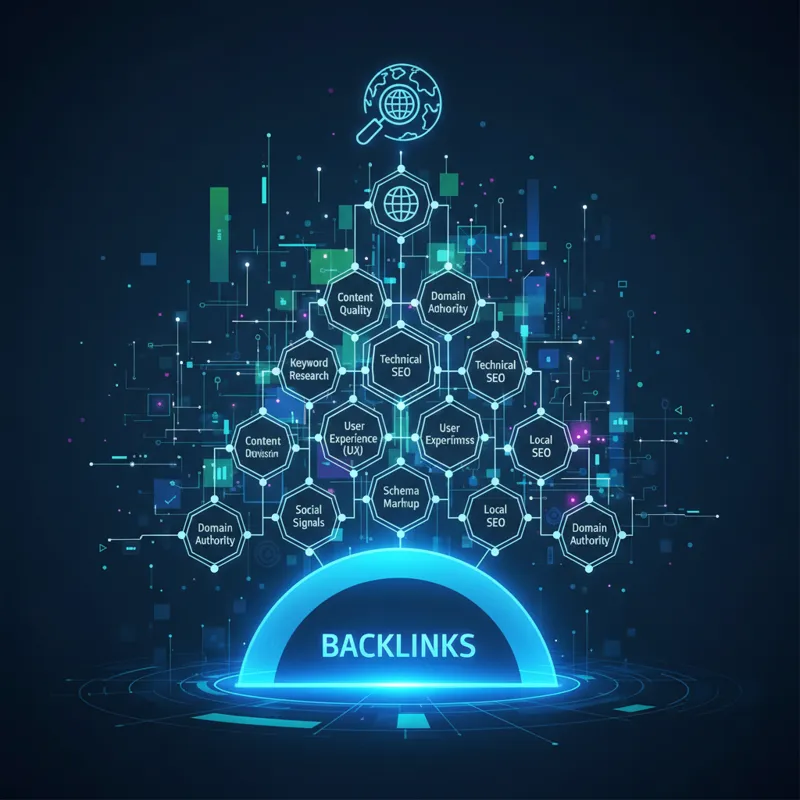
Backlinks aren’t just an old SEO tactic; they’re a perpetually evolving signal of web authority. In 2026, as Google refines its algorithms to prioritize helpful, reliable, and people-first content, the role of high-quality backlinks has only intensified. They directly impact your site’s E-E-A-T (Experience, Expertise, Authoritativeness, Trustworthiness) score, a critical component of Google’s ranking system. When reputable sites link to yours, they effectively vouch for your content’s quality and your site’s credibility.
Think of it this way: if a well-respected academic journal cites a research paper, that paper gains immediate credibility within the scientific community. On the web, a link from a respected industry publication or a trusted news source does the same for your content. These aren’t just arbitrary points; they are contextual endorsements that help search engines understand the broader relevance and perceived value of your information. Without these votes, your site can appear isolated, making it harder for search engines to confidently rank your content above competitors.
The Non-Negotiable Foundation: Create Link-Worthy Content

A person meticulously crafting high-quality, in-depth content on a laptop, surrounded by research materials, symbolizing the effort required to produce link-worthy material.
Before you even think about outreach or promotion, you need something worth linking to. This might sound obvious, but it’s where many link-building efforts falter. Nobody wants to link to mediocre, rehashed, or superficial content. In 2026, the web is saturated with information. To stand out, your content must offer unique value.
Consider these types of content that naturally attract links:
-
- Original Research and Data Studies: If you conduct proprietary surveys, experiments, or compile unique data sets, others will want to cite your findings. This establishes you as a primary source.
- Comprehensive Guides and Tutorials: Create the absolute best, most exhaustive guide on a topic. When someone needs to explain a complex subject, they’ll often link to the definitive resource.
- Authoritative Opinion Pieces and Thought Leadership: When you present a strong, well-supported viewpoint on an industry trend or challenge, experts in your field may link to it to either support or respectfully challenge your arguments.
- Interactive Tools and Resources: Calculators, templates, checklists, and other practical tools are highly shareable and often linked to as helpful resources.
- Compelling Infographics and Visualizations: Complex data or processes simplified into visually appealing graphics can be extremely effective for earning links, especially when embedded on other sites.
- Unique Case Studies: Real-world examples demonstrating how your product, service, or advice delivers tangible results are powerful.
Your goal isn’t just to write; it’s to create an asset that fills an information gap, provides a novel perspective, or simplifies a complex problem for your target audience. This is the first, most crucial step in natural backlinks ideas and earning valuable inbound links.
Strategic Preparation: Before You Actively Pursue Backlinks

A chessboard with pieces strategically arranged, representing careful planning and foresight in a link-building campaign.
Jumping into link building without a plan is like sailing without a map. You might get somewhere, but it’s unlikely to be your desired destination. A well-thought-out strategy maximizes your efforts and ensures you’re pursuing the right types of links.
Understand Your Competitors’ Backlink Strategy
Start by analyzing who links to your competitors. Tools like Ahrefs, Semrush, or Moz can reveal their backlink profiles, showing you which sites link to them, what anchor text they use, and which pages receive the most links. This isn’t about copying; it’s about identifying patterns and potential opportunities. For example, if many competitors are getting links from industry-specific resource pages, that’s a clear signal for you.
Prioritize Quality and Relevance
Not all links are created equal. A link from a highly authoritative, relevant website in your industry is worth far more than dozens of links from low-quality, irrelevant sites. Google’s algorithms are sophisticated enough to differentiate. Focus on sites that:
-
- Have high domain authority and trustworthiness (e.g., reputable news sites, industry leaders, educational institutions).
- Are topically relevant to your website and content.
- Receive organic traffic themselves, indicating genuine engagement.
- Place the link naturally within valuable content, rather than in a spammy footer or sidebar.
Aim for a Natural Link Profile
Search engines look for diversity and naturalness in your backlink profile. This means varying anchor text, getting links from a range of domain types (e.g., blogs, news, forums, directories), and acquiring links at a realistic pace. A sudden influx of identical links with exact-match anchor text can trigger flags. Focus on earning links that look like organic endorsements, not manufactured SEO signals.
Proven, White-Hat Strategies for How to Get Backlinks in 2026
These methods focus on earning links through genuine value and relationships, aligning perfectly with Google’s guidelines and ensuring long-term success.
1. Guest Posting (Guest Blogging)
Guest posting remains one of the most effective ways to acquire high-quality, relevant links. It involves writing an article for another website in your industry or niche, which includes a link back to your site, typically in the author bio or within the body of the content. This is an excellent way to introduce your expertise to a new audience and secure valuable backlinks.
To succeed:
-
- Find Relevant Sites: Search for “your niche + guest post,” “write for us,” or “contribute.” Look for sites that frequently publish external contributors and have an audience similar to yours.
- Pitch Unique Ideas: Don’t just pitch topics you’ve already covered. Propose fresh, valuable content ideas that align with their audience’s interests and your expertise.
- Write High-Quality Content: Treat guest posts as seriously as you treat your own site’s content. Provide well-researched, engaging, and original articles. A link to your site from a blogger guest post is more valuable when the content around it is exceptional.
- Natural Link Placement: Ensure your link is contextually relevant and adds value to the reader. Avoid forcing it.
2. Broken Link Building
This strategy involves finding broken links on other websites and suggesting your content as a replacement. It’s a win-win: you help webmasters fix issues on their sites, and you get a backlink.
How it works:
-
- Identify Target Sites: Use tools to find resource pages, industry blogs, or news sites that frequently link out to other resources.
- Scan for Broken Links: Browser extensions like Check My Links or tools like Ahrefs’ Broken Link Checker can quickly identify dead links on a page or across an entire domain.
- Create or Identify Relevant Content: If you find a broken link, check if you have existing content that could serve as a direct, better replacement. If not, consider creating it.
- Outreach: Politely inform the webmaster about the broken link and suggest your superior content as a replacement. Frame it as helpful advice.
3. Resource Page Link Building
Many websites curate “resource pages” or “recommended readings” lists for their audience. These pages are goldmines for link builders.
Steps:
-
- Find Resource Pages: Search Google for queries like “your topic + resources,” “your topic + useful links,” “inurl:links your topic,” or “inurl:resources your topic.”
- Analyze Pages: Review the existing resources. Is your content genuinely better or more comprehensive than something already listed? Does it fill a gap?
- Pitch Your Content: Reach out to the webmaster, highlighting why your resource would be a valuable addition to their page. Emphasize the benefit to their audience.
4. Unlinked Mentions
Sometimes, websites or blogs mention your brand, product, or a key person in your organization without linking back to your site. This is a relatively easy way to acquire links.
Process:
-
- Monitor Mentions: Use tools like Google Alerts, Brandwatch, or Semrush to track mentions of your brand name or key terms.
- Filter for Unlinked Mentions: Look for instances where your brand is mentioned but not linked.
- Polite Outreach: Contact the author or webmaster, thank them for the mention, and politely ask if they wouldn’t mind turning the mention into a link. Most are happy to do so, as it benefits their readers.
5. The Modern Skyscraper Technique
Originally popularized by Brian Dean, the Skyscraper Technique involves finding the best-performing content on a topic, creating something significantly better, and then reaching out to sites that linked to the original, suggesting they link to your superior version. In 2026, “better” means more comprehensive, more up-to-date, better designed, or featuring original data.
Key steps:
-
- Find Link-Worthy Content: Use SEO tools to identify content in your niche with many backlinks.
- Create 10x Content: Don’t just improve it by 10%; aim to make it ten times better. Add more data, visuals, expert quotes, or unique angles.
- Identify Original Linkers: Find all the sites that linked to the original, inferior content.
- Outreach: Show them your superior version and explain why it’s a better resource for their audience.
6. HARO (Help a Reporter Out) and Source Requests
Platforms like HARO connect journalists and content creators with expert sources. By responding to relevant queries, you can get cited and linked to in major publications, news sites, and reputable blogs.
Tips:
-
- Sign Up and Monitor: Register for HARO alerts (or similar services) in your niche.
- Respond Promptly and Concisely: Journalists are on tight deadlines. Provide direct, insightful answers that showcase your expertise.
- Offer Value: Don’t just offer generic statements. Provide unique perspectives, data, or actionable advice.
7. Data-Driven Content and Original Research
This is where you become the primary source. Conducting original surveys, experiments, or compiling industry-specific data makes your content inherently link-worthy. Others will cite your unique findings as evidence or reference points.
-
- Identify Gaps: What data is missing in your industry? What questions do people frequently ask that lack definitive answers?
- Execute and Analyze: Conduct your research carefully and present the findings clearly, often with visuals.
- Promote: Share your findings widely. Other content creators, journalists, and researchers will naturally link to you.
8. Infographics and Visual Assets Promotion
Visually appealing content, especially infographics, can be highly effective for attracting links. They summarize complex information into an easily digestible format.
-
- Create Engaging Infographics: Invest in professional design. The information must be valuable and presented clearly.
- Share and Promote: Submit your infographics to infographic directories, share them on social media, and reach out to relevant blogs to see if they’d like to embed your graphic (with a link back, of course).
9. Strategic Partnerships and Collaborations
Building relationships with other businesses, influencers, or content creators in your niche can lead to mutually beneficial link-building opportunities.
-
- Co-create Content: Partner on a research project, webinar, or a piece of content. Both parties can then naturally link to it from their respective sites.
- Cross-Promotion: Promote each other’s valuable content, including relevant links where appropriate.
- Joint Ventures: If you launch a product or service together, official announcements and landing pages will naturally link back to both partners.
What Most People Get Wrong About How to Get Backlinks
While the strategies above are effective, many common pitfalls can derail your efforts or, worse, lead to penalties. Understanding these misconceptions is key to a successful backlink strategy.
Focusing Solely on Quantity Over Quality
One of the biggest mistakes is believing that more links automatically mean better rankings. In 2026, Google values the quality and relevance of a backlink far more than its sheer number. A single link from a high-authority, relevant domain can outweigh hundreds of links from spammy, low-quality sites. Spending time trying to buy high PR links or buy high DA PBN links without careful vetting often leads to wasted money and potential harm to your SEO.
Ignoring Internal Linking
While external backlinks bring authority from other sites, a robust internal linking structure helps distribute that authority throughout your own website. It improves user experience, helps search engines discover your content, and ensures that link equity flows to your most important pages. Many overlook the power of internal links, focusing exclusively on external acquisition.
Neglecting Your Backlink Profile Post-Acquisition
Acquiring links is only half the battle. You need to continuously monitor your backlink profile for changes. Links can go dead, or worse, new spammy links can point to your site (negative SEO). Regularly auditing your backlink profile allows you to identify and disavow harmful links before they cause issues, maintaining the health of your site’s SEO.
Using Unnatural Anchor Text
Exact-match anchor text (e.g., always linking “best digital marketing agency” to your agency’s homepage) was once common but is now a red flag. Your anchor text profile should look natural, with a mix of branded terms, naked URLs, generic phrases (“read more,” “here”), and partial-match keywords. Over-optimizing anchor text signals manipulation.
Being Impatient
Link building is a long-term strategy. It takes time to build relationships, create exceptional content, and see the results of your outreach. Expecting immediate ranking boosts after a few weeks is unrealistic. Sustainable link growth happens gradually and organically. The results compound over months and even years.
What to Avoid: Risky Backlink Tactics in 2026
While the desire to quickly acquire backlinks is understandable, certain tactics can severely damage your site’s search performance and lead to penalties. Google’s algorithms are constantly evolving to detect and penalize manipulative link schemes.
-
- Link Farms and Directories for SEO: Submitting your site to thousands of low-quality, irrelevant directories or participating in “link farms” (networks designed solely to exchange links) is a guaranteed way to get penalized.
- Automated Link Building Software: Any software promising to build hundreds or thousands of links overnight is a trap. These links are almost always spammy, irrelevant, and easily detectable by search engines.
- Excessive Link Buying: While paid advertising can involve links (e.g., sponsored content with rel=”sponsored” attributes), directly buying links for SEO purposes without proper disclosure is against Google’s guidelines. This includes paying for links within articles, sidebars, or footers without the appropriate rel=”nofollow” or rel=”sponsored” attribute.
- Private Blog Networks (PBNs): These are networks of websites created solely to pass link equity to a “money site.” While they might offer short-term gains, PBNs are highly risky. Google actively identifies and devalues them, often leading to severe manual penalties for sites caught using them. For instance, attempts to buy high DA PBN links often involve these risky tactics.
- Spammy Forum or Blog Comment Links: Leaving irrelevant comments on blogs or forums purely to drop a link is ineffective and can harm your reputation. Focus on genuine engagement when participating in online communities.
- Article Spinning: Generating multiple versions of the same article using automated tools and submitting them to various low-quality sites for links is a black-hat tactic that offers no value.
The goal is to earn links, not to trick search engines into thinking you’ve earned them. Focus your energy on creating value and building genuine relationships.
Measuring Success and Refining Your Backlink Strategy
Link building isn’t a one-and-done activity. It requires continuous effort, measurement, and adaptation.
Key Metrics to Track:
-
- Referring Domains: The total number of unique websites linking to yours. This is often a more important metric than the total number of backlinks, as it indicates a broader vote of confidence.
- Domain Authority/Rating: Monitor the authority scores (like Domain Rating from Ahrefs or Domain Authority from Moz) of the sites linking to you. You want links from strong domains.
- Organic Traffic and Keyword Rankings: Ultimately, the goal of link building is to improve your visibility. Track your organic search traffic and the rankings for your target keywords.
- Referral Traffic: See how much traffic your backlinks directly send to your site. High referral traffic indicates relevant and engaged audiences on the linking sites.
- Backlink Profile Health: Regularly use tools to check for new toxic links and maintain a clean backlink profile.
Tools for Analysis:
-
- Google Search Console: Provides basic backlink data directly from Google.
- Ahrefs, Semrush, Moz: Industry-standard tools for comprehensive backlink analysis, competitor research, and outreach management.
Remember, search engines prioritize the user experience above all else. By consistently producing valuable content and earning high-quality, relevant links through ethical means, you’re not just playing by the rules; you’re building a truly authoritative and trustworthy presence on the web. This is how to get backlinks that stand the test of time and algorithm updates.
Frequently Asked Questions About How to Get Backlinks
How long does it take to see results from backlink building?
Realistically, it can take anywhere from a few weeks to several months to see significant impacts on your search rankings and organic traffic. The timeline depends on factors like your industry’s competitiveness, the authority of your existing domain, and the quality and quantity of links you acquire. Consistency is more important than speed.
How many backlinks do I need to rank well?
There’s no magic number. The “right” amount of backlinks is entirely relative to your industry, target keywords, and competitors. Highly competitive niches might require hundreds or even thousands of quality referring domains, while less competitive ones might only need a few dozen. Focus on acquiring high-quality, relevant links rather than hitting an arbitrary numerical target.
Are ‘no-follow’ links useful for SEO?
Yes, absolutely. While ‘no-follow’ links traditionally don’t pass direct link equity (PageRank), Google confirmed in 2019 that they treat ‘nofollow’ (and ‘sponsored’ and ‘ugc‘) as hints, meaning they may consider them in some cases. More importantly, ‘no-follow’ links still drive referral traffic, increase brand visibility, and contribute to a natural-looking backlink profile. A healthy profile includes a mix of ‘do-follow’ and ‘no-follow’ links.
For additional insights into how links contribute to overall search visibility, consider exploring how outbound links SEO also plays a part in demonstrating topical relevance and authority.
What’s the difference between a good and a bad backlink?
A good backlink comes from a high-authority, relevant, trustworthy website, is placed naturally within valuable content, and is likely to send relevant referral traffic. It genuinely adds value for the reader. A bad backlink comes from a low-quality, spammy, irrelevant, or penalized website, is typically forced or automated, and offers no real value to anyone involved, potentially harming your SEO.
How do I check my current backlinks?
You can check your backlinks using several tools: Google Search Console offers a free report under the “Links” section (though it’s not exhaustive). For more detailed analysis, paid tools like Ahrefs, Semrush, Moz, or Majestic SEO provide comprehensive data on your entire backlink profile, including referring domains, anchor text, and potential toxic links.