

In the complex world of search engine optimization (SEO), few concepts carry as much weight, or are as frequently discussed, as “link juice.” If you’re looking for good backlinks for SEO, understanding link juice isn’t just helpful; it’s fundamental to how your website performs. Often described as the flow of authority and ranking power through hyperlinks, link juice is the lifeblood of a robust SEO strategy. It’s the mechanism by which search engines like Google perceive and propagate trust, relevance, and value across the internet. In 2026, while algorithms have certainly evolved, the core principle remains: links are votes, and the stronger the voter, the more significant their endorsement.
What is Link Juice, Really? Understanding the Mechanism
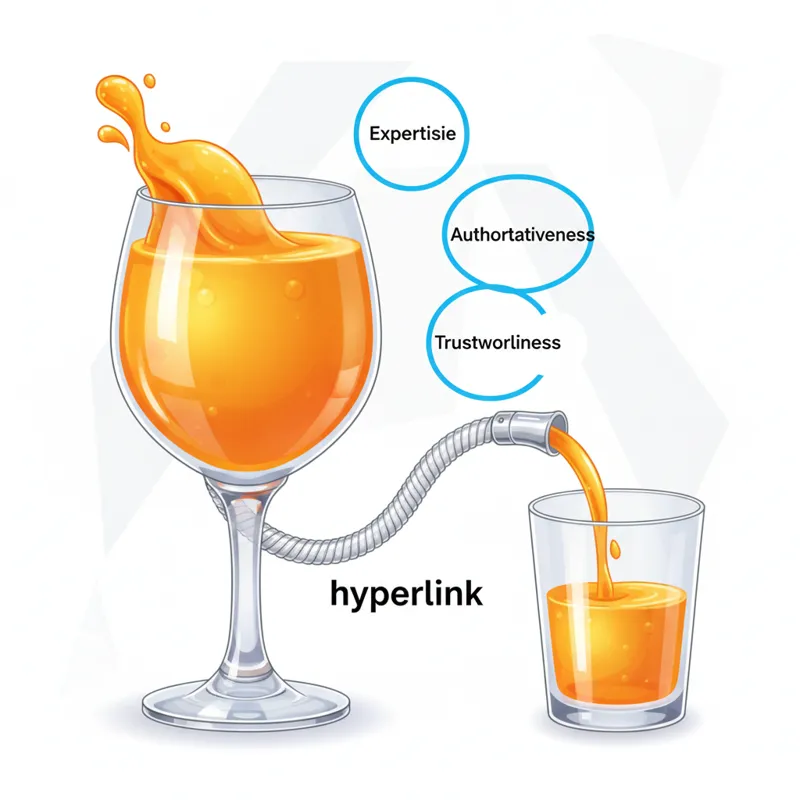
At its core, “link juice” isn’t a magical elixir, but rather a conceptual representation of how authority, relevance, and trust are distributed across the web via hyperlinks. Think of it as a current of energy flowing through connections. When one webpage links to another, it’s essentially casting a vote of confidence, signaling to search engines that the linked-to page has valuable content worthy of attention. The strength of this vote the amount of “juice” transferred isn’t arbitrary; it depends on several measurable factors related to the source of the link.
This isn’t about some secret Google metric you can directly measure. Instead, it’s about how Google’s algorithms, through various signals, assess the value of a link. Historically, this was often simplified to PageRank, a foundational algorithm developed by Google founders Larry Page and Sergey Brin. While PageRank scores are no longer publicly visible, the underlying concept of authority flowing through links is very much alive and integrated into how Google ranks pages today. It’s about more than just quantity; it’s about the quality, relevance, and trust of the source linking to you.
The Source of the Flow: Where Link Juice Comes From
A diagram illustrating various sources of link juice. One source is a “High Authority Domain” (e.g., a reputable news site) with arrows pointing to a target site. Another is an “Internal Page” within the same site, also with arrows. A third is a “Social Media Mention” with a broken arrow to signify less direct juice flow. Different arrow thicknesses indicate varying juice strength.
Not all links are created equal. The amount of link juice a page receives is heavily dependent on the characteristics of the page and domain sending the link. Understanding these sources is crucial for any effective SEO strategy.
Authority and Trust of the Linking Domain
The most significant factor determining link juice strength is the overall authority and trustworthiness of the linking website. A link from a well-established, highly reputable domain, like a major news outlet or a government website, carries immense weight. These sites have accumulated years of trust signals, high-quality content, and a strong backlink profile of their own.
For instance, a link from a .gov site or a respected educational institution (.edu) is often considered a powerful endorsement. This is because these domains are typically less susceptible to spam and more closely monitored for accuracy and reliability. A mention on a site like Wikipedia, while often nofollow, signifies a level of encyclopedic relevance that can still indirectly contribute to authority.
Relevance of the Linking Page and Content
Beyond overall domain authority, the specific relevance of the linking page matters immensely. A link from a page discussing “digital marketing strategies” to your page about “advanced SEO tactics” will pass more targeted and valuable link juice than a link from a page about “pet grooming tips.”
Google’s algorithms are sophisticated enough to understand the topical relationship between pages. A highly relevant link reinforces your page’s expertise within its niche, which aligns directly with E-E-A-T (Experience, Expertise, Authoritativeness, Trustworthiness) principles that are central to ranking in 2026. This contextual relevance tells search engines that the link is natural and genuinely helpful to users, rather than manipulative.
Anchor Text: The Label on the Bottle
The anchor text the visible, clickable text of a hyperlink is another critical component in the flow of link juice. It provides a direct signal to search engines about the topic of the linked-to page.
Using descriptive and relevant anchor text is vital. If a link uses the anchor text “latest SEO techniques” to point to a page about new SEO methods, it clearly communicates the content of the destination page. Over-optimization with exact-match keywords, however, can be detrimental and might trigger spam filters. The key is natural variation and relevance.
Link Placement and Surrounding Content
Where a link appears on a page also influences its value. A link embedded naturally within the main body content of an article typically passes more link juice than a link found in a footer, sidebar, or a long list of external resources. This is because in-content links are usually perceived as more editorial and intentional.
The text surrounding the link also provides context, further enhancing its relevance. A link that flows seamlessly with the narrative is more likely to be clicked and valued by users, which Google observes.
How Link Juice Flows: Internal vs. External Links
An intricate network diagram showing a central “Hub Page” with multiple arrows going to “Internal Pages” within the same network. Several arrows also originate from external “Authority Sites” pointing towards the “Hub Page” and some internal pages, illustrating both internal and external link juice flow.
Link juice isn’t just about external websites pointing to yours. It’s a fundamental force both within your own site and across the broader web. Understanding this dual nature is key to harnessing its power.
External Link Juice: The Power of Endorsement
When an external website links to a page on your site, it’s akin to a public endorsement. This is the most commonly understood form of link juice, often referred to as “backlinks.” These are the votes of confidence from other domains that demonstrate your content’s value and authority. High-quality external links are crucial for building domain authority and improving organic rankings. The more authoritative and relevant the external sources linking to you, the stronger your overall domain authority becomes. This, in turn, allows your pages to rank more easily for competitive keywords.
Effective how to get backlinks strategies focus on attracting these high-quality external links, often through content marketing, outreach, or fostering relationships within your industry.
Internal Link Juice: The Underrated Distributor
Often overlooked, internal linking is your direct control over how link juice flows within your own website. Every internal link you create directs authority from one page on your site to another. This is incredibly powerful because you can strategically distribute link juice to important pages that you want to rank higher.
Consider a well-structured content hub. Your pillar page might be about “digital marketing,” and it links to several sub-pages covering specific topics like “SEO,” “social media,” and “email marketing.” The authority the pillar page receives from external links can then be distributed to these supporting pages through internal links, boosting their individual ranking potential. This also helps search engine crawlers discover and index more of your content efficiently. Proper internal linking helps define your site’s architecture and conveys topical depth to search engines.
Factors that Can Dilute or Block Link Juice
Just as certain factors enhance link juice, others can weaken or even prevent its flow. Ignoring these can significantly undermine your SEO efforts.
Nofollow, Sponsored, and UGC Attributes
For years, the `rel=”nofollow”` attribute was the primary way to tell search engines not to pass link juice. It was typically used for paid links, comments, or forums where you didn’t want to endorse the linked site.
In 2019, Google introduced `rel=”sponsored”` for advertising or paid placements and `rel=”ugc”` for user-generated content (like forum posts or comments). While Google stated these became “hints” rather than strict directives, the general understanding in 2026 is that using these attributes, particularly `nofollow` for non-editorial links, will largely prevent the direct transmission of link juice. They still offer contextual signals, but don’t expect them to directly boost rankings in the same way a standard dofollow link would.
Too Many Outbound Links
If a page has an excessive number of outbound links, the link juice flowing from that page can become highly diluted. Imagine a single glass of water being poured into a hundred smaller cups; each cup receives very little. Similarly, a page with hundreds of outbound links will distribute its authority very thinly, diminishing the power passed to any single destination. Prioritize quality over quantity when linking out.
Irrelevant Links
Links to completely irrelevant websites, even if dofollow, often pass little value. If a page about “gourmet cooking” links to a site about “car repairs” without any logical context, search engines might disregard that link’s value for ranking purposes. Worse, it could signal an attempt to manipulate rankings, potentially leading to penalties.
Broken Links and Redirect Chains
A broken link (a 404 error) prevents any link juice from reaching its intended destination. It’s like a burst pipe; the water never gets to the tap. Regularly auditing your website for broken internal and external links is crucial.
Similarly, long redirect chains (multiple redirects before reaching the final page) can dilute or slow down the transfer of link juice. Each hop in a redirect chain can slightly diminish the signal, and too many hops can render the link virtually ineffective. Minimize redirect chains whenever possible.
Orphan Pages
An “orphan page” is a page on your website that has no internal links pointing to it. Since search engines primarily discover content by following links, an orphan page might rarely be crawled and, consequently, will not receive any internal link juice. This effectively isolates it from the rest of your site’s authority flow.
Optimizing Internal Link Juice for Maximum Impact
You have direct control over how link juice flows within your own site. Strategic internal linking is a powerful, often underutilized, SEO tactic.
Creating Content Hubs and Pillars
One of the most effective ways to manage internal link juice is through a hub-and-spoke or pillar-and-cluster content model. A central, comprehensive pillar page (e.g., “The Ultimate Guide to Digital Marketing”) links out to several detailed sub-pages (spokes) that delve into specific aspects (e.g., “SEO Best Practices,” “Social Media Strategy,” “Email Marketing Funnels”).
Each spoke page, in turn, links back to the pillar page and, where relevant, to other related spoke pages. This structure establishes clear topical authority, strengthens the pillar page, and distributes its accumulated link juice to the supporting content, making it easier for search engines to understand the relationships and topical depth of your site.
Strategic Anchor Text
Just like external links, internal links benefit from descriptive and relevant anchor text. Avoid generic anchors like “click here” or “read more.” Instead, use phrases that accurately reflect the content of the destination page. For example, linking to your page about “advanced keyword research” with the anchor “advanced keyword research techniques” is far more effective.
Contextual Linking
Place internal links naturally within the main body of your content. These contextual links are seen as more valuable than those buried in footers or sidebars. They also encourage users to navigate deeper into your site, reducing bounce rates and increasing time on page – signals Google appreciates.
Prioritizing Important Pages
Use internal links to direct link juice towards your most important pages – those you want to rank highest. If you have a high-authority blog post, use it to link to product pages, service pages, or conversion-focused content that needs a ranking boost. This is a deliberate act of using your site’s inherent authority to bolster specific targets. This is also where understanding what is a backlink profile can help you identify your strongest pages.
Attracting High-Quality External Link Juice
While internal linking is within your control, attracting external link juice requires a more proactive approach. It’s about earning those valuable votes. This is a core part of any effective link acquisition strategy.
Create Truly Link-Worthy Content
This is the foundation. People link to content because it’s valuable, authoritative, unique, and solves a problem. This could be:
-
- Original Research or Data: Studies, surveys, or unique data analysis that others can cite.
- Comprehensive Guides: In-depth, evergreen resources that become a go-to reference in your industry.
- Unique Tools or Resources: Free calculators, templates, or interactive maps that people find useful.
- Compelling Visuals: Infographics, data visualizations, or videos that are easy to share and embed.
Focusing on quality content naturally increases your chances of earning mentions and links.
Proactive Outreach
Once you have link-worthy content, don’t just wait for people to find it. Identify websites, blogs, and industry publications that would genuinely benefit from linking to your resource. Craft personalized outreach emails explaining why your content is a good fit for their audience. Focus on value, not just asking for a link.
Broken Link Building
Find broken links on authoritative websites in your niche. If you have relevant content that could replace the broken resource, reach out to the webmaster. You’re offering a solution to their problem (a broken link) while gaining a valuable backlink for yourself. Tools can help you identify these opportunities.
Guest Posting (Strategic and High-Quality)
Contributing high-quality guest posts to relevant, authoritative websites in your industry can be a legitimate way to earn valuable links. The focus should always be on providing genuine value to the host site’s audience, not just dropping a link. This can be part of a broader blogger guest post strategy.
Leveraging Digital PR
Think beyond traditional SEO. Can your unique data, expert insights, or interesting stories attract media attention? Digital PR involves reaching out to journalists, influencers, and industry publications to secure mentions and links from high-authority news sites. This often results in powerful external link juice that can significantly boost your domain authority. Consider platforms like Forbes as a target for such mentions.
What Most People Get Wrong About Link Juice in 2026
Even with years of SEO experience, some common misconceptions about link juice persist, particularly as algorithms evolve.
1. Quantity Over Quality
This is perhaps the most enduring mistake. Many still believe that more links, regardless of their source, automatically mean better rankings. In 2026, Google is highly adept at distinguishing between genuinely earned, high-quality links and manipulated, low-quality ones. A handful of authoritative, relevant links will always outperform hundreds of spammy, irrelevant ones. Focusing on building a white hat link building strategy is non-negotiable.
2. Ignoring Internal Linking
While external links often grab the headlines, neglecting your internal linking strategy is a huge missed opportunity. Many sites have fantastic content that never ranks well because its internal link juice distribution is poor, leaving important pages isolated or undervalued. You literally have control over this powerful flow of authority.
3. Obsessing Over “Nofollow”
While `nofollow` links don’t directly pass link juice in the traditional sense, they still offer value. They can drive referral traffic, increase brand awareness, and contribute to a natural-looking link profile. Google has also stated they use nofollow as a “hint,” meaning some contextual value might still be derived. Don’t dismiss them entirely; a healthy backlink profile includes a mix of link types.
4. Expecting Instant Results
Link building, especially for high-quality link juice, is a long-term strategy. It takes time to earn authoritative links and for search engines to discover, crawl, and evaluate them. Patience and consistency are key. Trying to shortcut the process with manipulative tactics almost always leads to short-term gains followed by long-term penalties.
5. Underestimating Topical Relevance
Many focus solely on “domain authority” metrics. While important, the topical relevance of the linking page and domain is paramount in 2026. A link from a medium-authority site that is *highly relevant* to your content can pass more valuable, targeted link juice than a link from a very high-authority but completely irrelevant site. Context is king.
Measuring and Monitoring Link Juice (Indirectly)
Since Google doesn’t provide a public “link juice” meter, SEO professionals rely on third-party tools and observable outcomes to gauge its flow and impact.
Third-Party Metrics as Proxies
Tools like Ahrefs (Domain Rating, URL Rating), Moz (Domain Authority, Page Authority), and Semrush (Authority Score) provide proprietary metrics that attempt to quantify a website’s overall link authority. These are derived from their own backlink databases and algorithms. While not exact replicas of Google’s internal calculations, they offer valuable benchmarks for comparison and progress tracking. A higher DR/DA/AS generally correlates with a stronger ability to pass link juice.
Tracking Organic Rankings and Traffic
The ultimate measure of effective link juice acquisition is an improvement in your organic search rankings and, consequently, increased organic traffic to your target pages. When your pages start ranking higher for relevant keywords, it’s a strong indication that the link juice you’ve acquired and distributed is having a positive effect.
Monitoring Backlink Profiles
Regularly auditing your what is a backlink profile using SEO tools helps you understand where your link juice is coming from. Look for:
-
- New, high-quality links acquired.
- Loss of important links.
- An increase in referring domains (the number of unique websites linking to you).
- The distribution of anchor text.
- Any signs of suspicious or spammy links that might need to be disavowed.
The Evolving Landscape of Link Juice in 2026
While the core principles of link juice remain, its interpretation by search engines is continuously refined. In 2026, we see a continued emphasis on sophistication.
E-E-A-T and Holistic Authority
Google’s focus on E-E-A-T (Experience, Expertise, Authoritativeness, Trustworthiness) has grown stronger. Link juice isn’t just a numerical value; it’s intricately tied to these qualitative signals. A link from an expert in your field, endorsing your content, passes not just “authority” but also contributes to your perceived expertise and trustworthiness. This means the *source* of the link carries immense weight, especially in YMYL (Your Money Your Life) niches.
Semantic Understanding
Search engines are getting better at understanding the nuanced meaning and context of content, not just keywords. This means the topical relevance of a link isn’t just about matching a few words; it’s about the broader semantic relationship between the linked pages. Links embedded in semantically relevant content pass a richer, more potent form of link juice.
User Experience as a Reinforcer
While not directly part of link juice, user experience (UX) metrics implicitly influence how Google values links. If a link brings users to a page that provides a poor experience (slow loading, high bounce rate, low engagement), the long-term value of that link might diminish in Google’s eyes. Links that lead to positive user interactions are more likely to retain their power.
Generative AI and Information Consumption
With the rise of generative AI, the way users consume information is shifting. AI models often synthesize information from multiple sources. Being a foundational, authoritative source cited by these models (which implicitly uses links and source recognition) can become another powerful way to gain visibility and, indirectly, reinforce the “link juice” concept as a measure of underlying authority. The ultimate goal remains providing the best, most trusted information for users.
Actionable Strategies for Improving Link Juice Flow
To effectively leverage link juice, integrate these strategies into your ongoing SEO efforts:
-
- Prioritize Link-Worthy Content: Consistently create unique, valuable resources that naturally attract links. Think guides, data, tools.
- Master Internal Linking: Regularly audit and optimize your internal links. Create content hubs, use descriptive anchor text, and direct juice to high-priority pages.
- Focus on Relevance Over Quantity: When building external links, aim for quality, authoritative, and topically relevant sources. A good place to start is researching free seo backlinks list resources, but always vet them for quality.
- Proactive Link Acquisition: Don’t wait for links to happen. Engage in outreach, broken link building, and strategic guest posting.
- Monitor and Maintain: Regularly check for broken links (internal and external), assess your backlink profile for suspicious links, and ensure your site structure supports optimal link juice flow.
- Enhance E-E-A-T: Build your brand’s reputation, highlight author expertise, and ensure your content is accurate and trustworthy. This makes your site a more attractive linking target.
Frequently Asked Questions About Link Juice
Does Nofollow Still Pass Link Juice?
Not directly in the traditional sense. While Google announced in 2019 that `nofollow`, `sponsored`, and `ugc` attributes are now treated as “hints” rather than strict directives, the general consensus and observable evidence in 2026 is that they do not contribute to direct ranking boosts or pass significant “link juice.” However, they can still drive referral traffic and contribute to a natural link profile.
How Many Backlinks Do I Need?
There’s no magic number. The effectiveness of backlinks is entirely dependent on their quality, relevance, and the competitive landscape of your niche. One highly authoritative and relevant link can be more valuable than hundreds of low-quality, irrelevant ones. Focus on acquiring high-quality links, not just accumulating a high volume.
Can I Lose Link Juice?
Yes, absolutely. You can lose link juice if linking pages remove their links to your site, if those pages become broken (404), if they add a `nofollow` attribute, or if Google devalues the source site due to spam or irrelevance. Broken internal links on your own site can also prevent internal link juice from flowing effectively.
Is “SEO Juice” the Same as Link Juice?
Yes, “SEO juice” is another common, informal term used interchangeably with “link juice.” Both refer to the conceptual flow of authority, relevance, and trust signals through hyperlinks that positively impact a page’s search engine ranking potential.
How Quickly Does Link Juice Take Effect?
The impact of link juice isn’t instantaneous. Once a link is established, search engine crawlers need to discover it, evaluate the source and destination pages, and factor it into their ranking algorithms. This process can take anywhere from a few days to several weeks or even months, especially for new or low-authority sites. Building link juice is a long-term strategy.


