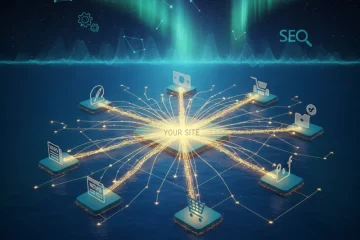
Understanding seo link analysis is essential for improving search engine rankings and website authority. Backlinks remain one of the most influential ranking factors, and analyzing them helps identify opportunities to strengthen your SEO strategy.
Before performing link analysis, it is recommended to conduct a complete ecommerce SEO audit to understand your website’s overall SEO health.
A proper seo link analysis helps you:
- evaluate backlink quality
- detect toxic links
- analyze competitor backlinks
- identify new link-building opportunities
In this guide, you’ll learn how seo- link analysis works, which tools to use, and how to interpret backlink data for better rankings.
What is SEO Link Analysis?
SEO link analysis is the process of examining backlinks pointing to a website in order to evaluate their quality, relevance, and SEO impact.
Search engines like Google use backlinks as signals of trust and authority. The more high-quality links a website has, the more likely it is to rank higher in search results.
According to Google Search Central, links help search engines discover new pages and determine how important a page is.
A proper seo link analysis typically evaluates:
| Backlink Factor | Description |
|---|---|
| Domain authority | strength of linking domains |
| Link relevance | topical relevance |
| Anchor text | keywords used in links |
| Link type | dofollow vs nofollow |
| Referring domains | number of unique sites linking |
Why SEO Link Analysis is Important
Performing regular seo link analysis helps identify strengths and weaknesses in your link profile.
Benefits of backlink analysis
✔ improve domain authority
✔ discover new link opportunities
✔ detect spam backlinks
✔ monitor competitor link strategies
✔ strengthen overall SEO performance
A strong backlink profile can significantly boost search rankings and organic traffic.
Key Metrics to Analyze in SEO Link Analysis
When performing seo link analysis, several metrics should be evaluated.
1 Referring Domains
Referring domains are the number of unique websites linking to your site.
Search engines often value:
- more unique domains
- fewer spam domains
For example, a website with 200 quality referring domains often performs better than one with 1000 low-quality links.
2 Backlink Quality
Not all links provide equal value.
High-quality links usually come from:
- authoritative websites
- niche-related blogs
- trusted media websites
Tools like Ahrefs and SEMrush help evaluate backlink quality.
3 Anchor Text Distribution
Anchor text refers to the clickable words used in hyperlinks.
Healthy anchor text distribution usually includes:
- branded anchors
- generic anchors
- partial match keywords
Overusing exact match keywords may lead to SEO penalties.
4 Link Type (Dofollow vs Nofollow)
A complete seo link analysis should examine link types.
| Link Type | SEO Value |
|---|---|
| Dofollow | passes authority |
| Nofollow | limited ranking value |
| Sponsored | paid link |
| UGC | user-generated content |
Balanced link types are considered natural by search engines.
Step-by-Step Process for SEO Link Analysis
Learning seo link analysis requires a structured approach.
Step 1: Collect Backlink Data
First, gather backlink data using SEO tools.
Popular tools include:
- Ahrefs
- SEMrush
- Moz
These tools generate a complete backlink report showing referring domains and anchor text.
Step 2: Identify Toxic Links
Some backlinks can harm SEO performance.
Examples of toxic links:
- spam directories
- link farms
- irrelevant websites
- hacked websites
Toxic links should be disavowed using
Google Search Console.
Step 3: Analyze Competitor Backlinks
Competitor backlink analysis helps identify new opportunities.
Compare your site with competitors to discover:
- websites linking to competitors
- content that earns backlinks
- guest posting opportunities
Step 4: Identify Link Building Opportunities
After performing seo link analysis, you can identify potential link sources.
Common link building strategies include:
- guest blogging
- broken link building
- resource page links
- digital PR
These methods help build high-quality backlinks.
Tools for SEO Link Analysis
Several tools make seo-link analysis easier.
Popular backlink analysis tools
| Tool | Main Feature |
|---|---|
| Ahrefs | backlink database |
| SEMrush | competitor analysis |
| Moz | domain authority metrics |
| Majestic | trust flow analysis |
Many SEO professionals also use automated systems.
How SEO Link Analysis Improves Rankings
A strong backlink profile helps search engines understand a website’s authority.
SEO-link analysis improves rankings by:
- removing harmful links
- building high-quality backlinks
- improving link diversity
- strengthening domain trust
When done correctly, backlink analysis can significantly increase search visibility.
SEO Link Analysis Best Practices
To get the best results from seo-link analysis, follow these practices.
Focus on Quality
High-quality links are more valuable than large numbers of low-quality links.
Maintain Natural Anchor Text
Avoid overusing exact-match keywords.
Monitor Links Regularly
Backlink profiles should be monitored monthly.
Diversify Link Sources
Links from multiple domains improve authority.
Common Mistakes in SEO Link Analysis
Avoid these common mistakes:
Ignoring Toxic Links
Spam links can harm rankings.
Only Tracking Quantity
Link quality matters more than volume.
Not Monitoring Competitors
Competitor backlink strategies reveal valuable opportunities.
SEO-link analysis is a crucial part of any successful SEO strategy. By analyzing backlinks, identifying toxic links, and discovering new link opportunities, businesses can significantly improve their search engine rankings.
Regular seo link analysis helps maintain a healthy backlink profile and ensures that your website continues to build authority and trust in search engines.
When combined with a complete ecommerce SEO audit, backlink analysis becomes even more powerful for improving organic performance.
What is SEO link analysis?
SEO link analysis is the process of evaluating backlinks pointing to a website to measure their quality, relevance, and SEO value.
Why is backlink analysis important?
Backlink analysis helps identify spam links, improve link-building strategies, and increase domain authority.
Which tools are used for SEO- link analysis?
Popular tools include:
Ahrefs
SEMrush
Moz
Google Search Console