In the evolving digital landscape of 2026, understanding good backlinks for SEO remains fundamental to online success. If you’re looking for backlink basics, the challenge isn’t just about acquiring links; it’s about learning how to get relevant backlinks that genuinely move the needle for your website’s authority and organic traffic. Google’s algorithms have become incredibly sophisticated, looking far beyond mere link counts. Today, a backlink’s value is deeply intertwined with its contextual relevance, the authority of the linking domain, and how naturally it fits into the web ecosystem. Ignoring relevance is a surefire way to invest time and resources into strategies that yield diminishing, if not negative, returns.
Why Contextual Relevance is Non-Negotiable in 2026
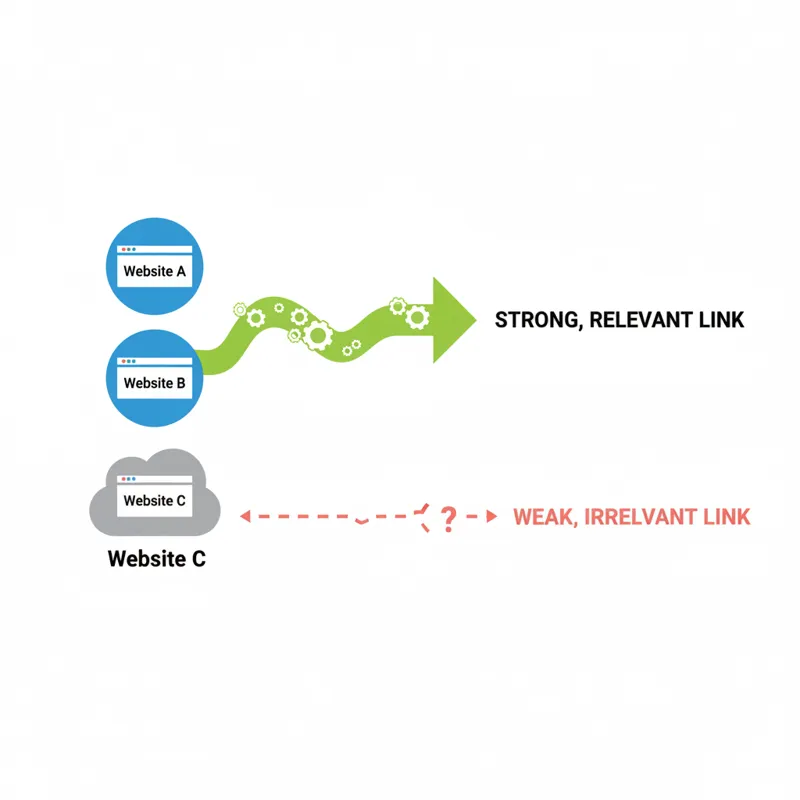
The days of acquiring links purely for their perceived “Domain Authority” score are long gone. While a high-authority domain is still a desirable characteristic, its relevance to your niche and the specific content it links to is paramount. Think about it from Google’s perspective: a link from a highly authoritative culinary blog to an article about advanced astrophysics makes little sense to a user, and therefore, little sense to a search engine trying to understand relationships between topics.
In 2026, algorithms are adept at understanding topical neighborhoods. When a link points to your content, Google interprets it as a vote of confidence. However, if that vote comes from an entirely unrelated source, it dilutes the signal. A relevant link, conversely, reinforces your website’s topical authority, signaling to search engines that your content is a trusted resource within its specific domain. This isn’t just about keywords; it’s about semantic relatedness, user intent, and the natural flow of information across the web.
The Algorithmic Perspective: A Semantic Web
Google’s move towards understanding language and topics, rather than just keywords, means it processes content and its connections semantically. A backlink from a page discussing “electric vehicle battery technology” to your page about “EV charging infrastructure” is highly relevant. A link from a page about “pet grooming tips” to your EV page is not, even if the pet blog has a high domain rating. The core principle: relevance validates expertise, and expertise builds trust and authority.
Identifying Truly Relevant Backlink Opportunities
A person with a magnifying glass examining a complex web of interconnected websites, with some connections highlighted as “relevant” and others as “irrelevant.” The visual should convey meticulous research and discernment.
The first step to efficiently acquiring quality links is to know where to look. This isn’t a random process; it’s a strategic hunt for digital neighborhoods that naturally align with your content and audience.
1. Competitor Backlink Analysis
One of the most practical starting points is examining the backlink profiles of your direct competitors who already rank well for your target keywords. These sites have likely done the heavy lifting of identifying relevant linking opportunities. Tools like Ahrefs, SEMrush, or Moz can reveal where your competitors are getting their links from.
-
- Identify Common Link Sources: Look for patterns. Are there specific industry publications, resource pages, or blogs that link to multiple competitors? These are prime candidates for your outreach.
- Discover Untapped Opportunities: Sometimes, competitors link to unique, niche-specific sites you might not have considered.
- Analyze Link Quality: Don’t just copy. Evaluate each competitor link for its actual relevance and authority. A competitor might have some low-quality links; you don’t want those.
2. Content Gaps and Resource Page Link Building
High-quality content is a prerequisite for earning relevant backlinks. If you want others to link to you, you need something genuinely valuable to offer. Many websites maintain “resource pages” or “recommended readings” sections. These are goldmines for relevant links.
-
- Create Linkable Assets: Develop comprehensive guides, original research, unique data visualizations, interactive tools, or in-depth case studies that solve a real problem or answer a complex question for your audience. For example, if your industry is specialized, a unique industry report could be a powerful tool for resource link building.
- Find Relevant Resource Pages: Use search operators like
"your niche keyword" inurl:resourcesor"your niche keyword" intitle:linksto find pages that curate useful content. - Offer Value: When reaching out, don’t just ask for a link. Explain how your content genuinely adds value to their audience, perhaps filling a gap in their existing recommendations or providing a fresher perspective.
3. Broken Link Building (Link Reclamation)
This evergreen strategy continues to be effective in 2026. Websites inevitably accumulate broken links over time (404 errors) as content moves or is deleted. Finding these broken links on relevant sites presents a perfect opportunity.
-
- Identify Relevant Sites: Start with websites in your niche or related industries.
- Scan for Broken Links: Use browser extensions (like Check My Links) or SEO tools to scan these sites for broken outbound links.
- Offer Your Content as a Replacement: If you find a broken link, check if the original content that link pointed to is something you already have on your site, or something you could create. Then, reach out to the site owner, politely inform them of the broken link, and suggest your relevant content as a high-quality replacement. This is a win-win: they fix a problem on their site, and you get relevant backlinks.
4. Strategic Guest Posting
Guest posting has long been a powerful way to build high-quality backlinks, but its efficacy hinges entirely on strategy and relevance. Forget low-quality, mass-produced guest posts. In 2026, quality and genuine contribution are paramount.
-
- Target Truly Relevant Blogs/Publications: Only write for sites whose audience aligns perfectly with yours. The publication should be a recognized authority in your niche.
- Provide Original, High-Value Content: Don’t repurpose old articles. Offer fresh insights, unique perspectives, or original research. The goal is to provide exceptional value to their readers, establishing you as an expert.
- Natural Link Placement: Your backlink should flow naturally within the article, providing further reading or a citation where appropriate. Over-optimized, keyword-stuffed anchor text is a red flag. Aim for brand mentions, partial-match, or natural anchors that complement the article’s flow. A truly valuable contribution will also benefit the backlink blogger by providing great content.
5. HARO (Help A Reporter Out) and Expert Roundups
Platforms like HARO connect journalists with expert sources. Regularly monitoring queries related to your industry can lead to high-authority mentions and links.
-
- Be Proactive: Respond promptly and professionally to relevant queries.
- Provide Expert Insights: Offer well-articulated, concise, and unique quotes or data. Journalists are looking for genuine expertise.
- Participate in Expert Roundups: These collaborative blog posts gather insights from multiple industry leaders. Becoming a contributor can earn you valuable links and exposure.
6. Partnerships and Collaborations
Building genuine relationships within your industry can organically lead to relevant backlinks.
-
- Co-create Content: Partner with complementary businesses or influencers to create joint webinars, e-books, research, or blog series. Both parties naturally link to the collaborative content.
- Event Sponsorship/Participation: Sponsoring or participating in industry events can lead to mentions and links on event pages, press releases, and attendee blogs.
- Testimonials: If you use a product or service you genuinely love, offer to write a testimonial. Many businesses feature testimonials on their site, often linking back to yours.
The Anatomy of a Truly Effective Relevant Backlink

A detailed anatomical drawing of a backlink, showing components like anchor text, surrounding text, linking domain authority, page relevance, and user intent, all labeled clearly.
Beyond simply finding a “relevant” website, understanding the specific characteristics that make a backlink powerful is crucial. Not all relevant links are created equal.
1. High Domain Authority and Trustworthiness
While relevance is paramount, the authority and trustworthiness of the linking domain still matter. A relevant link from a low-authority, spammy site won’t carry much weight. Look for sites that themselves have a strong backlink profile, consistent organic traffic, and a good reputation within their niche. Domain Authority is still a useful directional metric, but it’s not the sole determinant.
2. Contextual Link Placement and Surrounding Text
A link embedded naturally within the body content of a highly relevant article is far more valuable than one tucked away in a footer, sidebar, or a generic “links” page. The text immediately surrounding your link tells Google (and users) what your linked page is about. This contextual signal is immensely powerful.
3. Natural and Varied Anchor Text
Anchor text — the visible, clickable text of a hyperlink — is a strong relevance signal. However, over-optimizing with exact-match keywords can be detrimental. In 2026, a natural and varied anchor text profile is essential. This includes:
-
- Branded Anchors: Your brand name (e.g., “RankWeb”).
- Naked URLs: The actual URL of your page.
- Generic Anchors: “Learn more,” “here,” “this article.”
- Partial-Match Keywords: “guide to relevant backlinks,” “strategies for ethical link building.”
- Long-Tail Phrases: Descriptive phrases that naturally fit the content.
The key is diversity and naturalness. Google wants to see a link profile that looks like it was earned organically by real people.
4. Dofollow vs. Nofollow Attributes
The rel="dofollow" attribute (which is the default if no attribute is specified) passes “link equity” or “PageRank” to the linked page. The rel="nofollow", rel="sponsored", and rel="ugc" attributes tell search engines not to pass this equity. While dofollow links are generally preferred for SEO, a healthy backlink profile includes a mix of both. Nofollow links from highly relevant and authoritative sites can still drive referral traffic and enhance brand visibility, and Google has clarified that it treats nofollow as a hint, meaning some value might still be passed.
What Most People Get Wrong When Trying to Get Relevant Backlinks
Despite the abundance of information, several common pitfalls continue to trip up website owners and SEOs trying to get relevant backlinks effectively.
1. Mistaking Keyword Match for True Relevance
Many believe that if a linking page contains the same keywords as their target page, it’s relevant. This is a superficial understanding. True relevance goes deeper, involving the entire topical context, the audience of the linking site, and the user intent behind the link. A page about “apple pies” linking to your “apple tech reviews” page might have the word “apple,” but the contextual relevance is nonexistent.
2. Obsessing Over Quantity Over Quality and Relevance
The sheer number of backlinks used to be a dominant ranking factor. Not anymore. A few highly relevant, authoritative links will always outperform hundreds of low-quality, irrelevant ones. Focusing on scaling link acquisition without rigorous quality and relevance checks is a waste of resources and can even be harmful.
3. Ignoring Outbound Links on the Linking Page
When assessing a potential backlink, don’t just look at the incoming link. Also consider the outbound links SEO strategy of the linking page. If a page links out to dozens of unrelated, low-quality sites, your link might be diluted or associated with a “bad neighborhood,” regardless of its initial relevance. A page that links thoughtfully to other relevant, authoritative resources is a better environment for your link.
4. Over-Aggressive Anchor Text Optimization
Trying to manipulate rankings by using exact-match keyword anchor text for every link is a classic black-hat tactic that Google has long penalized. A natural anchor text profile is diverse. Any pattern that looks too “perfect” or engineered will raise red flags with search engine algorithms.
5. Neglecting Internal Linking
While not strictly “backlinks” (which are external), many undervalue the role of internal linking in consolidating and distributing authority across their own site. A strong internal linking structure helps search engines understand your site’s hierarchy and topical relationships, making your content more discoverable and authoritative in the eyes of external sites looking to link.
6. Focusing Solely on “Dofollow” Links
While dofollow links pass direct equity, dismissing all nofollow links is a mistake. Nofollow links from highly trafficked, relevant publications can drive significant referral traffic, build brand awareness, and contribute to a natural-looking link profile. Google views a healthy mix as more natural.
Practical, Actionable Strategies to Get Relevant Backlinks in 2026
Building a robust, relevant backlink profile isn’t a quick fix; it’s an ongoing process that requires strategic thinking, consistent effort, and a genuine commitment to creating value.
1. Create Unbeatable Content
This cannot be stressed enough. If you want people to link to your content, it must be exceptional. Aim to create “10x content” – content that is ten times better than anything else currently ranking for your target keywords. This could mean:
-
- Original Research & Data: Conduct surveys, analyze proprietary data, or perform experiments. Data-driven content is highly shareable and linkable.
- Comprehensive Guides: Create definitive, in-depth resources that leave no stone unturned on a topic.
- Unique Tools or Visualizations: Interactive maps, calculators, or infographics that simplify complex information.
- Case Studies: Demonstrate real-world results and insights from your work or industry. These are particularly potent if you’re looking for how to build backlinks for ecommerce or other client-based services.
Once you have this content, actively promote it. Don’t just publish and hope.
2. Personalized Outreach and Relationship Building
Mass-emailing generic link requests is ineffective. In 2026, outreach must be highly personalized and value-driven.
-
- Target Specific Individuals: Identify the specific editor, content manager, or journalist you need to reach.
- Craft Personalized Messages: Reference specific articles on their site, explain why your content is a good fit for their audience, and how it adds value. Avoid “copy-paste” templates.
- Build Relationships: Engage with potential linkers on social media, comment on their articles, or share their content. Building rapport often precedes a successful link request.
- Follow Up Thoughtfully: A polite, brief follow-up email can significantly increase response rates without being annoying.
3. Leverage Digital PR and Brand Mentions
Digital PR focuses on getting your brand, products, or services mentioned (and ideally linked) in high-authority online publications, news sites, and industry blogs.
-
- Press Releases for Newsworthy Events: Launching a new product, achieving a significant milestone, or releasing unique research can attract press.
- Expert Commentary: Position yourself or your team as experts for media inquiries (e.g., via HARO or direct outreach to journalists).
- Unlinked Brand Mentions: Use tools to find instances where your brand or product is mentioned online without a hyperlink. Reach out and politely request that they make it a clickable link. This is a very straightforward way to reclaim missed link opportunities.
4. Embrace Local SEO Link Building (If Applicable)
For businesses with a physical location or serving a specific geographic area, local backlinks are incredibly relevant.
-
- Local Citations & Directories: Ensure your business is listed consistently on local directories (Google My Business, Yelp, industry-specific directories).
- Local Sponsorships: Sponsoring local sports teams, charities, or community events can earn you links from local organization websites.
- Local Partnerships: Collaborate with other local businesses for joint promotions or content, leading to reciprocal links.
5. Monitor and Maintain Your Backlink Profile
Link building isn’t a “set it and forget it” task. Your backlink profile is dynamic.
-
- Regular Audits: Periodically check your backlink profile for lost links, broken links pointing to your site (fix these with 301 redirects), or newly acquired low-quality/spammy links.
- Disavow Toxic Links: If you identify genuinely harmful links that you cannot get removed, use Google’s Disavow Tool as a last resort. This tells Google to ignore those links when evaluating your site. Exercise caution with this tool; improper use can harm your SEO.
Utilizing Tools to Streamline Your Link Acquisition
In 2026, manual link building is often too slow and inefficient. While human strategy and personalization are irreplaceable, various tools can significantly aid your efforts to get relevant backlinks.
-
- Backlink Analysis Tools (e.g., Ahrefs, SEMrush, Moz): These are indispensable for competitor analysis, broken link identification, and tracking your own backlink profile. They help you uncover where your competitors get their links and identify high-authority, relevant domains within your niche.
- Content Research Tools (e.g., BuzzSumo, AnswerThePublic): Help you identify trending topics, popular content formats, and questions your audience is asking, guiding you to create highly linkable assets.
- Outreach Tools (e.g., Hunter.io, BuzzStream): Aid in finding contact information for website owners and managing your outreach campaigns, allowing for personalized emails at scale (though personalization remains critical).
- Website Crawlers (e.g., Screaming Frog): Useful for identifying broken links on target websites, finding pages for resource link building, or auditing your own site’s structure.
Remember, tools are enablers, not magic bullets. They provide data and automate repetitive tasks, but the strategic thinking, creative content generation, and personalized relationship building remain human endeavors.
Things People Usually Miss: The Subtleties of Relevance
Beyond the obvious, some critical nuances often get overlooked in the pursuit of relevant backlinks, especially as Google’s understanding evolves.
1. The User Journey and Intent
A truly relevant backlink serves a user. Does clicking that link enhance the user’s understanding, provide a valuable resource, or further their journey? If the link feels disruptive or irrelevant to the user experience on the linking site, its value diminishes, regardless of topical keyword match. Think about the entire user experience, not just the SEO signal. A link should be a helpful bridge, not a random detour.
2. The “Recency” of the Linking Content
While an old, authoritative page can still pass value, links from recently updated or new, relevant content can often carry more weight. Google tends to favor fresh, relevant information. When conducting outreach, prioritize sites that are actively publishing and updating content in your niche.
3. Authority Beyond Domain-Level Metrics
Don’t just look at Domain Rating (DR) or Domain Authority (DA). Consider the page-level authority of the specific linking page. Is it a well-trafficked article? Does it itself have relevant internal and external links? A link from a high-DR site’s obscure, low-authority page might be less valuable than a link from a mid-DR site’s highly relevant, well-regarded article.
4. Ignoring Your Own Internal Link Structure
A common oversight is neglecting your own internal linking. You can learn more about internal linking from various reputable sources. While not external backlinks, your internal links dictate how PageRank flows within your site. If your target page for external backlinks isn’t well-supported internally, it won’t maximize the benefit of those external links. Ensure your strongest internal pages link strategically to the content you’re trying to rank.
5. The Value of Mentions Without Direct Links
Google has confirmed its ability to understand unlinked brand mentions. While a direct hyperlink is always preferable, a strong, relevant mention of your brand or product on a high-authority site still contributes to your overall online authority and brand recognition. Pursue these mentions and, where appropriate, politely follow up to convert them into clickable links.
FAQ: Getting Relevant Backlinks in 2026
Q1: How do I know if a backlink is truly “relevant”?
A: A relevant backlink comes from a website or page that shares a similar topic, niche, or audience as your own. The content surrounding the link should naturally lead to your page, making sense for a user to click. It’s about topical and semantic alignment, not just keyword matching.
Q2: Is buying backlinks still a viable strategy in 2026?
A: Buying backlinks, especially from networks or low-quality sources, is a high-risk, black-hat tactic that Google actively penalizes. While some agencies might promise to buy high PR links, such practices are generally against Google’s guidelines. Focus on earning links through valuable content and ethical outreach. The risks far outweigh any potential short-term gains.
Q3: How many backlinks do I need to rank well?
A: There’s no magic number. The quantity is far less important than the quality and relevance of the links. A few highly authoritative and relevant backlinks are much more effective than hundreds of low-quality, irrelevant ones. Focus on acquiring diverse, natural links that truly add value.
Q4: How long does it take for new backlinks to impact my rankings?
A: The impact can vary significantly. Google needs to discover and process the new links, and then re-evaluate your site’s position. This can take anywhere from a few weeks to several months. Be patient and consistent with your efforts. Sudden, unnatural spikes in links can sometimes trigger scrutiny.
Q5: Should I try to get links from popular social media sites?
A: Links from social media platforms (e.g., Facebook, X, LinkedIn, even YouTube backlink generator links if applicable) are typically “nofollow.” While they don’t directly pass link equity for SEO, they are crucial for driving traffic, increasing brand visibility, and signaling social proof. They are an important part of a holistic digital marketing strategy, even if not direct SEO ranking factors.
Conclusion: The Enduring Power of Relevant Backlinks
In 2026, the strategy to get relevant backlinks is fundamentally about demonstrating genuine value and building credible connections across the web. It’s a nuanced dance between creating exceptional content, strategically identifying authentic opportunities, and engaging in personalized, value-driven outreach. Gone are the days of shortcuts and manipulative tactics. Success in link building now hinges on mirroring Google’s own mission: to connect users with the most relevant, authoritative, and trustworthy information available.
By focusing on contextual relevance, prioritizing quality over quantity, and understanding the subtleties of how algorithms interpret links, you can build a robust backlink profile that not only withstands future algorithm updates but actively propels your website to greater visibility and authority. This isn’t just about SEO; it’s about building a stronger, more respected presence on the internet.