

In the dynamic landscape of digital marketing in 2026, where algorithm updates are frequent and user expectations are higher than ever, understanding and implementing effective white hat search engine optimization techniques is not just advisable—it’s absolutely essential for sustainable online success. Many businesses seek reliable methods for white hat link building, recognizing that while finding quality white hat search engine optimization techniques can be challenging, the long-term benefits far outweigh any shortcuts. This comprehensive guide will navigate you through the core principles, strategies, and actionable steps to ethically elevate your website’s visibility on Google, ensuring you build a robust and future-proof online presence for your US audience.
What Are White Hat SEO Techniques and Why Do They Matter in 2026?

White hat search engine optimization techniques refer to any SEO strategy that adheres strictly to search engine guidelines and focuses on providing value to human users rather than manipulating algorithms. Unlike black hat SEO, which employs deceptive and spammy tactics, white hat methods prioritize long-term growth, user experience, and genuine authority. In 2026, with Google’s relentless focus on E-E-A-T (Experience, Expertise, Authoritativeness, and Trustworthiness) and helpful content updates, these ethical practices are more crucial than ever. Websites that genuinely serve their audience, offer unique insights, and maintain a positive user experience are the ones Google rewards with higher rankings. Ignoring these principles risks severe penalties, including manual actions and complete de-indexing, which can be devastating for any business. Therefore, embracing white hat techniques is not merely about avoiding punishment; it’s about building a trusted, sustainable, and respected brand online.
Pillar 1: Foundational Technical SEO for White Hat Success
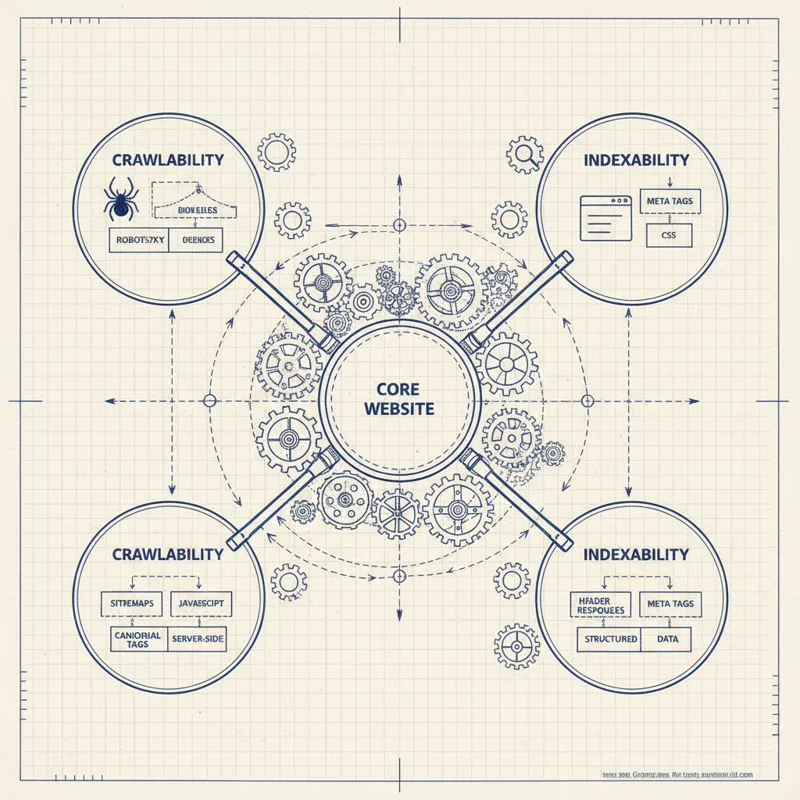
A blueprint drawing of a website structure with gears and lines connecting different components, representing technical SEO foundations.
Technical SEO forms the bedrock of any successful white hat strategy. It ensures that search engines can efficiently crawl, index, and understand your website’s content. Without a solid technical foundation, even the most exceptional content might struggle to rank.
Site Speed and Core Web Vitals
In 2026, site speed remains a critical ranking factor and a fundamental component of user experience. Google’s Core Web Vitals, which measure loading performance (Largest Contentful Paint – LCP), interactivity (First Input Delay – FID), and visual stability (Cumulative Layout Shift – CLS), directly impact how users perceive your site and how search engines rank it.
-
- Optimize Images: Compress images without sacrificing quality, use modern formats like WebP.
- Leverage Browser Caching: Allow browsers to store parts of your site, speeding up return visits.
- Minify CSS, JavaScript, and HTML: Remove unnecessary characters to reduce file sizes.
- Implement a Content Delivery Network (CDN): Distribute your content across servers worldwide to reduce load times for users in different geographical locations.
- Reduce Server Response Time: Choose a reliable hosting provider and optimize your server configuration.
Mobile-First Indexing
For years, Google has predominantly used the mobile version of a website for indexing and ranking. Ensuring your site is fully responsive and offers an excellent experience on all devices is non-negotiable.
-
- Responsive Design: Your site should automatically adapt to different screen sizes.
- Touch-Friendly Elements: Buttons and links should be easily tappable on mobile screens.
- Fast Mobile Load Times: Prioritize mobile performance as part of your Core Web Vitals strategy.
Secure and Accessible Websites (HTTPS & robots.txt)
Security and accessibility are not just good practice; they are foundational white hat search engine optimization techniques.
-
- HTTPS: Encrypting your website with an SSL certificate protects user data and is a recognized ranking signal. Ensure your entire site is served over HTTPS.
- robots.txt: Properly configure your
robots.txtfile to guide search engine crawlers, allowing them to access important pages while restricting less critical ones. - Sitemap.xml: Submit an accurate XML sitemap to Google Search Console to help search engines discover all your important pages.
Structured Data Markup
Structured data, or schema markup, helps search engines understand the context of your content, leading to richer search results (rich snippets). This can significantly increase your click-through rate.
-
- Identify Relevant Schema: Implement schema for articles, products, local businesses, FAQs, reviews, and more.
- Use Google’s Structured Data Testing Tool: Validate your implementation to catch errors.
Pillar 2: High-Quality Content Creation – The Core of White Hat SEO

A vibrant, detailed infographic showing interconnected ideas, keywords, and multimedia elements flowing into a central ‘content’ hub, with diverse user personas looking engaged.
Content remains king in 2026, but only if it’s high-quality, relevant, and truly helpful. White hat SEO places immense value on creating content that satisfies user intent comprehensively and establishes your site as an authoritative source.
User-Centric Content Strategy
Google’s algorithms are sophisticated enough to discern helpful, original content from thin or duplicated material. Your content strategy must revolve around your target audience’s needs and questions.
-
- Address User Intent: Understand what users are truly looking for when they type a query. Is it informational, navigational, transactional, or commercial investigation?
- Demonstrate E-E-A-T: For every piece of content, showcase your Experience (first-hand knowledge), Expertise (deep understanding), Authoritativeness (recognized authority in the field), and Trustworthiness (accuracy, safety, and reliability). This is paramount for ranking in 2026.
- Originality and Value: Don’t just regurgitate information. Offer unique insights, original research, case studies, or a fresh perspective.
Keyword Research and Topical Authority
Effective keyword research in 2026 goes beyond single keywords. It involves understanding topics and semantic relationships.
-
- Topic Clusters: Organize your content around core topics, with a pillar page covering the broad subject and cluster content delving into specific sub-topics.
- Long-Tail Keywords: Target longer, more specific phrases that indicate clear user intent. These often have lower competition and higher conversion rates.
- Natural Language Processing (NLP): Write naturally. Google understands synonyms, related concepts, and the overall context of your content.
- Utilize Tools: Employ keyword research tools (e.g., Ahrefs, Semrush, Google Keyword Planner) to identify relevant keywords, search volume, and competition.
Optimizing for Readability and Engagement
Even the most insightful content won’t be effective if it’s unreadable or unengaging.
-
- Clear and Concise Writing: Use straightforward language. Avoid jargon where possible, or explain it clearly.
- Structural Clarity: Employ headings (H2s, H3s, H4s), short paragraphs, bullet points, and numbered lists to break up text and improve scannability.
- Multimedia Integration: Incorporate images, videos, infographics, and interactive elements to enhance understanding and engagement. Ensure all multimedia is properly optimized (alt text for images, transcripts for videos).
Pillar 3: Ethical Link Building Strategies (White Hat Link Building)
Link building is often one of the most challenging aspects of white hat search engine optimization techniques. It involves acquiring high-quality backlinks from other reputable websites, signaling to Google that your content is valuable and authoritative. The key is to earn these links naturally through merit, rather than buying or manipulating them. For a deeper dive into this specific area, our white hat link building guide offers extensive strategies.
Earning Natural Backlinks
The most sustainable way to build links is by creating content so exceptional that other sites want to reference it naturally.
-
- Content Marketing: Develop unique, authoritative content (data studies, ultimate guides, compelling visuals) that acts as a ‘link magnet’.
- Relationship Building: Foster genuine connections with influencers, bloggers, and journalists in your industry. If they trust your expertise, they may naturally link to your relevant content.
- Guest Posting: Contribute high-quality, original articles to authoritative and relevant websites in your niche. Focus on providing value to their audience, not just getting a link. The link should be natural and contextual, often within your author bio or a relevant anchor in the body.
Broken Link Building
This effective strategy involves finding broken links on authoritative websites and suggesting your relevant, superior content as a replacement.
-
- Identify Broken Links: Use tools to scan competitor websites or industry resource pages for broken external links.
- Create Better Content: If you don’t already have it, create a piece of content that is better than the original broken link.
- Reach Out: Politely inform the webmaster about the broken link and suggest your content as a helpful replacement.
Resource Page Link Building
Many websites curate lists of useful resources for their audience. Identifying these pages and pitching your valuable content can be a great source of natural backlinks.
-
- Search for Resource Pages: Use search operators like “inurl:resources” + “your niche” or “intitle:links” + “your topic”.
- Personalized Outreach: Explain why your resource would be a valuable addition to their list.
Local SEO and Citations
For US businesses, particularly those with physical locations, local SEO is a critical component of white hat link building. Ensuring consistent NAP (Name, Address, Phone) information across online directories and local citation sites signals trust and authority to both users and search engines. When implementing ethical link building practices for businesses, focusing on local relevance helps Google confidently present your business in local search results.
It’s crucial to understand the clear distinction between these ethical approaches and practices like black hat link building, which employs manipulative tactics such as buying links, link farms, or hidden text. These can lead to severe penalties and are never recommended.
Pillar 4: User Experience (UX) and Engagement Signals
Google increasingly emphasizes user experience as a ranking factor. White hat search engine optimization techniques inherently focus on creating a positive experience for visitors, leading to stronger engagement signals that indirectly boost your rankings.
On-Page User Signals
Metrics like dwell time (how long a user stays on your page), bounce rate (users who leave after viewing only one page), and click-through rate (CTR) from search results can indicate content quality and user satisfaction.
-
- Improve Content Quality: Engaging, comprehensive, and well-structured content keeps users on your page longer.
- Clear Call to Actions (CTAs): Guide users to explore more relevant content on your site.
- Internal Linking: Strategically link to other relevant pages on your site to encourage deeper exploration.
- Optimize Meta Descriptions and Titles: Craft compelling snippets that accurately reflect your content and entice clicks from the SERP.
Site Navigation and Information Architecture
An intuitive website structure helps users find what they need quickly and easily, and also assists search engine crawlers in understanding your site’s hierarchy.
-
- Logical Hierarchy: Organize your content into logical categories and subcategories.
- Clear Navigation Menus: Ensure your main navigation is easy to understand and use.
- Breadcrumbs: Implement breadcrumbs to show users their current location within your site’s structure.
Personalization and Adaptability
While not directly a ranking factor, delivering a personalized and adaptable experience can significantly boost user satisfaction. This means understanding user preferences and dynamically adjusting content or recommendations (ethically, respecting privacy regulations).
Pillar 5: Local SEO for US Businesses (GEO Optimization)
For businesses targeting a US audience, particularly those with brick-and-mortar locations or serving specific geographic areas, local SEO is indispensable. It’s a specialized set of white hat search engine optimization techniques designed to improve visibility in local search results.
Google Business Profile (GBP) Optimization
Your Google Business Profile (formerly Google My Business) is the cornerstone of local SEO.
-
- Complete and Accurate Information: Fill out every section of your GBP with precise and up-to-date information, including business name, address, phone number, website, hours, and categories.
- High-Quality Photos: Upload attractive, relevant photos of your business interior, exterior, products, and team.
- Manage Reviews: Encourage customers to leave reviews and respond to all of them promptly and professionally (both positive and negative).
- Utilize GBP Posts: Use Google Posts to share updates, offers, events, and product news, keeping your profile active and engaging.
- Service Areas: Clearly define your service areas if you’re a service-area business.
Local Citations and Directories
Consistent business information across various online platforms reinforces your local presence.
-
- NAP Consistency: Ensure your business Name, Address, and Phone number are identical across all directories (Yelp, Yellow Pages, industry-specific directories).
- Build Local Citations: List your business on prominent local directories relevant to your industry and location.
Local Content Strategy
Create content that specifically targets local queries and interests.
-
- Location-Specific Keywords: Integrate city, state, or neighborhood names into your website content, product descriptions, and blog posts where relevant.
- Local Events and News: Write about local events, community initiatives, or news that resonates with your local audience.
- “Near Me” Optimization: While you can’t explicitly use “near me” in your content, optimizing for related local intent ensures your business appears when users search for services in their vicinity.
Monitoring and Adapting Your White Hat SEO Efforts
SEO is an ongoing process, not a one-time setup. Continuous monitoring, analysis, and adaptation are crucial to maintaining and improving your rankings.
Analytics and Reporting
Utilize robust analytics tools to track your performance and identify areas for improvement.
-
- Google Analytics 4 (GA4): Understand user behavior, traffic sources, conversions, and engagement metrics on your site.
- Google Search Console: Monitor your site’s performance in Google search results, identify crawl errors, indexing issues, and see which keywords you’re ranking for.
- Rank Tracking Tools: Keep an eye on your keyword rankings over time to gauge the effectiveness of your white hat search engine optimization techniques. Many reputable white hat SEO tools offer this functionality, helping you stay ahead.
Staying Current with Algorithm Updates
Google frequently updates its algorithms, from minor tweaks to major core updates. Staying informed is essential.
-
- Follow Official Google Channels: Keep an eye on Google’s blog and announcements.
- Industry News: Read reputable SEO blogs and news sites to stay updated on algorithm changes and best practices.
- Analyze Performance Dips/Spikes: If you notice significant changes in your traffic or rankings, investigate recent algorithm updates that might explain the shift.
Frequently Asked Questions About White Hat SEO Techniques (FAQ)
What’s the main difference between white hat and black hat SEO?
The fundamental difference lies in their approach to search engine guidelines. White hat SEO adheres to Google’s rules, focusing on providing genuine value to users and earning organic visibility through ethical means. Black hat SEO, conversely, uses manipulative, deceptive tactics designed to trick search engines, often resulting in short-term gains but long-term penalties.
How long does it take to see results from white hat SEO?
White hat SEO is a long-term strategy. While some improvements (like site speed) might show results relatively quickly, significant ranking increases and sustained organic traffic typically take several months to a year, or even longer for highly competitive niches. It requires patience and consistent effort.
Can I do white hat SEO myself, or should I hire an agency?
Many foundational white hat techniques can be implemented by individuals or small teams with dedicated learning and effort. However, comprehensive SEO, especially for competitive markets or complex websites, often benefits from the expertise of professionals. If you’re looking for specialized help, particularly with advanced strategies like link building, considering a best white hat link building agency might be a wise investment.
Are there any penalties for using white hat SEO?
No, by definition, white hat SEO adheres to search engine guidelines. Therefore, it does not incur penalties. In fact, it builds a resilient online presence that is less susceptible to algorithm changes.
What are some essential white hat SEO tools?
Key tools include Google Search Console (free), Google Analytics 4 (free), Ahrefs, Semrush, Moz, Screaming Frog (for technical audits), and various content optimization platforms. The specific tools you need depend on your budget and the complexity of your SEO efforts.
Embracing white hat search engine optimization techniques in 2026 is an investment in your website’s future. By prioritizing user experience, creating exceptional content, earning natural backlinks, ensuring technical soundness, and optimizing for local relevance, you build a sustainable and authoritative online presence that Google will consistently reward. The digital landscape will continue to evolve, but a commitment to ethical, user-focused SEO will always be the most reliable path to long-term success.


