
If you’re looking for the future of link building, finding quality automated link building can be challenging. In 2026, the landscape of search engine optimization has evolved significantly, making backlink acquisition more crucial yet complex than ever. The promise of automation often brings to mind images of spammy tactics and Google penalties, but that perception is increasingly outdated. Modern, ethical automated link building isn’t about cutting corners; it’s about leveraging technology to identify opportunities, streamline outreach, and manage relationships at a scale human teams alone can’t achieve efficiently, all while maintaining quality and relevance. This guide will explore how to approach automation intelligently, ensuring your efforts contribute positively to your site’s authority and rankings without risking your digital presence.
Understanding Automated Link Building in 2026: Beyond the Buzzwords

The term ‘automated link building’ frequently carries negative connotations, often associated with spammy, low-quality link schemes of the past. However, in 2026, the reality is far more nuanced. Ethical automation isn’t about robots mass-producing irrelevant links; it’s about optimizing the laborious, repetitive tasks inherent in legitimate link building processes.
What it Is (and Isn’t)
Automated link building refers to using software and tools to assist or execute various stages of the link acquisition process. This includes tasks like prospecting for relevant websites, finding contact information, drafting personalized outreach emails, monitoring campaigns, and analyzing results. It is important to distinguish this from fully autonomous, hands-off systems that attempt to generate links without human oversight, which almost invariably lead to poor quality and potential penalties.
What it isn’t is a magic bullet for instant rankings, nor is it a license to engage in unethical practices. It won’t build relationships for you, nor can it perfectly mimic genuine human discernment for content quality or contextual relevance. It’s a force multiplier for skilled professionals, not a replacement for them.
Why Automation is Essential Now
The sheer scale of the internet and the competitive nature of SEO make manual, purely human-driven link building incredibly resource-intensive. Identifying thousands of potential targets, vetting them for quality, finding contact details, and managing outreach campaigns for multiple projects quickly becomes overwhelming. Backlink automation, when applied correctly, offers:
-
- Efficiency: It drastically reduces the time spent on repetitive tasks.
- Scale: It allows you to process and engage with a much larger pool of prospects.
- Consistency: Automated systems can maintain a consistent approach across campaigns.
- Data-Driven Decisions: Tools provide data that helps refine strategies over time.
The Evolution of Link Building Ethics
Google’s algorithms have become incredibly sophisticated at detecting unnatural link patterns. This evolution has forced the industry to mature. The focus has shifted from “how many links can I get?” to “how many high-quality, relevant, contextually strong links can I earn?” Ethical automated link building strategies are designed to support this latter goal, ensuring that every link sought adheres to quality guidelines and genuinely contributes to a site’s authority, rather than detracting from it. For a deeper understanding of search engine principles, you can review resources like Wikipedia’s entry on SEO.
The Foundational Principles of Ethical Backlink Automation
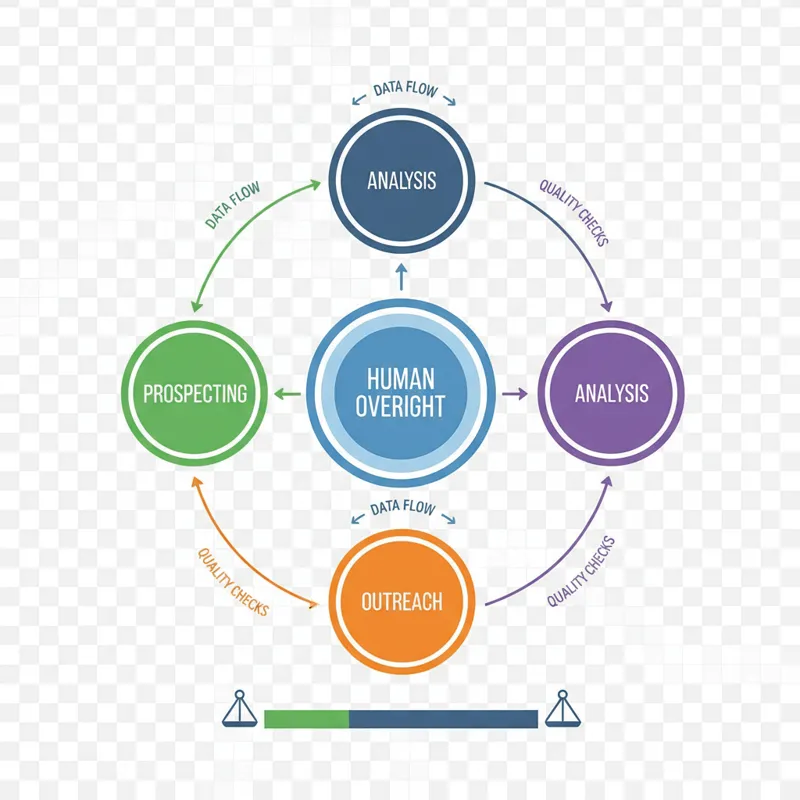
A conceptual diagram showing human oversight at the center, surrounded by automated processes like prospecting, outreach, and analysis, all connected by arrows indicating data flow and quality checks. Emphasize balance and control.
Before diving into specific tools and tactics, it’s crucial to establish the ethical framework that underpins any successful automated link building strategy. Without these principles, automation quickly devolves into spam.
Human Oversight: The Non-Negotiable Element
This is arguably the most critical principle. Automation should serve as an assistant, not an autonomous agent. Humans must define parameters, review outputs, make final decisions, and personalize critical communications. An automated system might identify a thousand potential link targets, but a human must vet them for true relevance, authority, and quality before outreach begins. This ensures that every potential interaction aligns with your brand’s values and Google’s guidelines.
Quality Over Quantity: Still King
While automation enables scale, the objective remains the acquisition of high-quality links. A single, authoritative, relevant backlink from an industry leader is infinitely more valuable than a hundred low-quality, spammy links. Your automated processes must be designed with stringent filtering criteria to prioritize quality, ensuring that your efforts are always directed toward earning links that genuinely boost your site’s authority and organic performance.
Relevance and Authority Matching
Links are most powerful when they come from sites that are topically relevant to yours and possess strong domain authority themselves. Automated tools excel at sifting through vast amounts of data to identify these characteristics. However, a human touch is needed to ensure contextual relevance, ensuring the link truly makes sense within the linking content and aligns with the user’s journey. Automating the identification of these matches is a game-changer, but verifying the actual fit requires human judgment.
Key Technologies Enabling Smart Link Building Automation
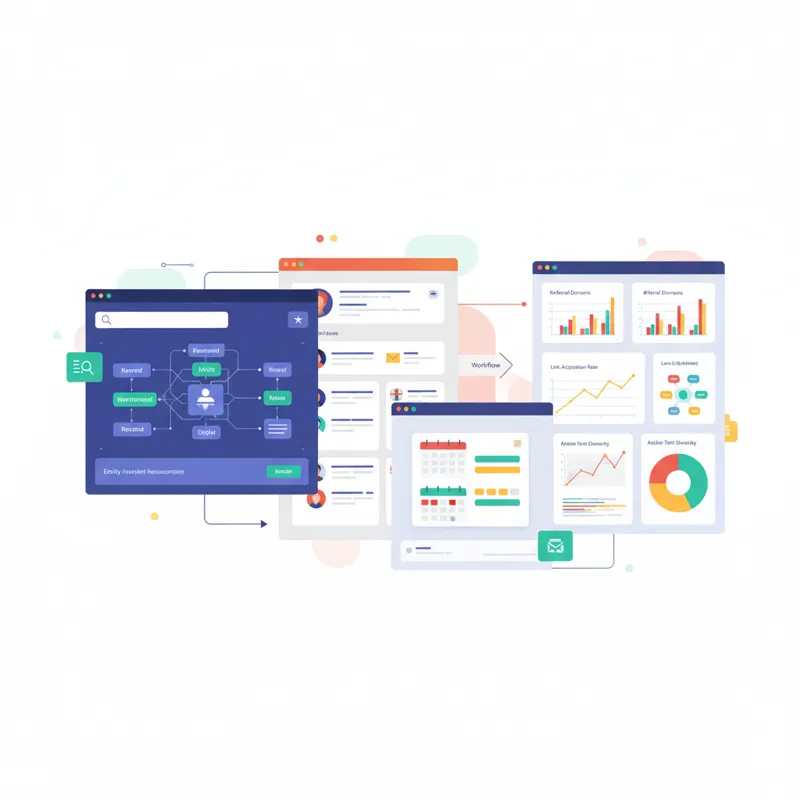
A collage of various software interfaces representing AI-powered research tools, CRM for outreach, and data analytics dashboards, all contributing to an efficient link building workflow.
The rise of advanced analytics, artificial intelligence, and sophisticated data processing has transformed what’s possible in automated link building. These technologies aren’t just for large enterprises; many are accessible to businesses of all sizes.
AI and Machine Learning for Prospecting
AI link building tools can analyze vast datasets to identify potential link opportunities far more quickly and accurately than a human could. They can:
-
- Identify relevant domains: Based on keywords, content topics, and existing backlink profiles.
- Assess domain authority and trust metrics: Using predictive analytics to gauge a site’s value.
- Find broken links on authoritative sites: Opening opportunities for broken link building.
- Uncover content gaps: Suggesting content ideas that are likely to attract links.
These AI-powered systems act as powerful research assistants, presenting a curated list of high-potential targets that a human then reviews and prioritizes.
Advanced Outreach Platforms
Modern outreach platforms go far beyond simple mail merges. They offer features like:
-
- Email sequence automation: Scheduling follow-ups based on recipient actions.
- Personalization at scale: Integrating data points (name, company, recent article) into email templates.
- Contact finding tools: Automatically locating email addresses for decision-makers.
- CRM functionalities: Managing relationships, tracking conversations, and logging link statuses.
These platforms streamline communication, ensuring that potential partners receive timely, personalized messages without a team having to manually send each one.
Data Scraping and Analysis Tools
While often associated with less ethical practices, data scraping, when used responsibly, is a powerful component of ethical backlink automation. Tools can efficiently extract publicly available data such as:
-
- Website URLs from specific niches.
- Contact information (publicly listed emails, social media profiles).
- Key metrics (domain authority, traffic estimates).
- Content topics and publication dates.
This raw data is then fed into other systems for qualification and outreach, allowing for a broader initial sweep that is later refined by human judgment. Understanding these tools helps in implementing effective AI-driven marketing strategies.
Strategic Approaches to Automating Link Acquisition
With the right tools and ethical framework, several link building strategies can be significantly enhanced through automation. The goal is to automate the mundane and repetitive, freeing up human expertise for critical tasks like relationship building and content creation.
Automating Prospect Identification and Qualification
This is where backlink automation truly shines. Instead of manually searching Google or sifting through backlink profiles, tools can:
-
- Crawl large datasets of websites based on predefined criteria (niche, DA, traffic).
- Analyze competitor backlink profiles to identify common link sources.
- Flag sites with relevant content or linking habits.
- Prioritize prospects based on various metrics, creating a ready-to-review list.
A human then reviews this filtered list, removing irrelevant sites and confirming the true potential of each prospect.
Streamlining Personalized Outreach
One of the biggest misconceptions about automated outreach is that it must be generic. Modern platforms allow for deep personalization using merge tags and conditional logic. For example, an email sequence could be automated to:
-
- Address the contact by name.
- Reference a specific article they published.
- Mention how your content or resource provides value related to their site.
- Send follow-ups only if no reply is received.
While the sending is automated, the initial template and strategic personalization points are crafted by a human to ensure relevance and a genuine tone.
Content Creation Support for Scaled Link Earning
Automation can assist in the creation of content designed to attract links. AI tools can help with:
-
- Topic generation: Identifying popular, link-worthy topics in your niche.
- Outline creation: Structuring content for maximum impact and shareability.
- Drafting initial content: Providing a starting point for writers to expand upon for various formats, including blogger guest post opportunities.
It’s crucial to remember that AI-generated content still requires significant human editing and refinement to ensure accuracy, originality, and a unique voice, especially for high-value content like guest posts.
Monitoring and Relationship Management Automation
Tracking the status of thousands of outreach emails and links can be daunting. Automation helps by:
-
- Monitoring email open and reply rates to optimize outreach strategies.
- Alerting you when a link goes live or is removed.
- Scheduling follow-ups or thank-you notes for successful placements.
- Maintaining a CRM-like database of contacts and interactions.
This systematic tracking ensures that no opportunity is missed and relationships are nurtured effectively.
Broken Link Building at Scale
This highly effective strategy involves finding broken links on authoritative websites, then reaching out to suggest your relevant content as a replacement. Automated tools can:
-
- Scan target websites for broken external links.
- Identify the original content that link pointed to.
- Suggest relevant content from your own site as a replacement.
The process of finding broken links can be entirely automated, while the outreach still requires human personalization to explain the value proposition clearly.
Competitor Backlink Analysis Automation
Understanding where your competitors are getting their links is a proven strategy. Automated tools can:
-
- Continuously monitor competitor backlink profiles.
- Identify new links acquired by competitors.
- Uncover common link sources across multiple competitors.
- Highlight opportunities you might be missing.
This backlink automation provides ongoing insights, allowing you to react quickly to competitive moves and find new avenues for your own link acquisition efforts.
What Most People Get Wrong About Automated Link Building
Despite the advancements, several critical misconceptions persist about automated link building. These errors often lead to wasted effort, poor results, or even penalties.
The “Set It and Forget It” Fallacy
The biggest mistake is believing that once an automated system is configured, it requires no further human intervention. This couldn’t be further from the truth. Automation in link building is a continuous process of monitoring, refining, and adapting. Campaigns need regular review, templates need tweaking, and new opportunities must be explored. Neglecting human oversight turns automation into a liability, not an asset.
Ignoring Personalization and Context
Many fail to grasp the extent to which personalization matters. Sending generic, templated emails, even if automated, is a surefire way to get ignored or marked as spam. Effective automated link building leverages technology to *enable* personalization at scale, not replace it. Every outreach message should feel like it was written specifically for the recipient, even if parts of it were templated and merged.
Underestimating Google’s Sophistication
Google’s algorithms are constantly evolving, becoming better at identifying manipulative link schemes. Attempting to trick the system with low-quality, high-volume automated links is a losing battle in 2026. The focus must always be on earning genuine, editorial links that provide value to both the linking site and its audience. Any automated link building strategy that deviates from this core principle is playing a dangerous game.
Mitigating Risks: Avoiding Penalties and Preserving Reputation
While the benefits of ethical automated link building are clear, the risks of getting it wrong are significant. Google penalties can devastate organic traffic, and a damaged reputation is hard to repair. Proactive risk mitigation is paramount.
Identifying Red Flags in Automated Processes
Regularly review your automated campaigns for warning signs:
-
- Low response rates: Indicates your personalization is insufficient or targets are irrelevant.
- High bounce rates from outreach emails: Suggests poor targeting or spam triggers.
- Links from low-quality or irrelevant sites: A sign your filtering criteria are too lax.
- Sudden influx of identical anchor text: A classic sign of manipulative linking.
- Negative feedback from recipients: People complaining about spam.
These are indicators that your automated systems might be straying into dangerous territory and need immediate adjustment.
Maintaining Control and Quality Checks
Implement rigorous checkpoints throughout your automated workflow. This means:
-
- Manually reviewing every prospect list before outreach begins.
- Spot-checking outreach emails for personalization errors or generic language.
- Auditing acquired links to ensure they meet quality and relevance standards.
- Having a human review and approve all final communications before they are sent.
These manual checks prevent small errors from escalating into widespread issues. Federal Trade Commission guidelines on clear and transparent marketing, while not directly related to link building, highlight the importance of ethical conduct in digital communications, which is a good parallel to consider when designing automated outreach processes (FTC Truth in Advertising).
Adapting to Algorithm Updates
Google’s algorithms are not static. What worked yesterday might not work tomorrow. Your automated link building strategy must be agile and responsive to algorithm updates. Stay informed through industry news, adjust your tools’ parameters, and be prepared to pause or modify campaigns if new guidelines or shifts in ranking factors emerge. Rigidity in automation is a recipe for disaster.
Implementing an Ethical Automated Link Building Strategy
Implementing a successful strategy requires careful planning, the right tools, and a commitment to ongoing optimization. This isn’t a passive activity; it’s an active management role.
Step-by-Step Framework
-
- Define Goals: What kind of links do you need? What metrics matter most?
- Audit Existing Profile: Understand your current strengths and weaknesses.
- Strategy Development: Choose specific tactics (e.g., broken link building, resource pages, guest posting).
- Tool Selection: Invest in platforms that support your chosen strategies and ethical standards.
- Setup & Configuration: Tailor tools with your specific criteria for prospecting and personalization.
- Human Review & Approval: Crucially, a human vets all prospects and outreach templates.
- Execute & Monitor: Launch campaigns, track performance, and look for red flags.
- Analyze & Refine: Use data to continuously improve your processes, templates, and targeting.
Tool Stack Considerations
A typical ethical automated link building stack might include:
-
- SEO Research Tools: Ahrefs, Semrush, Moz for competitor analysis, broken link finding, and domain metrics.
- Prospecting/Scraping Tools: Hunter.io, Scrapebox (used ethically for public data only), custom scripts.
- Outreach/CRM Platforms: Pitchbox, BuzzStream, Reply.io for managing campaigns and communications.
- Content Assistance Tools: AI writers (e.g., GPT-4 based platforms) for initial drafts, grammar checkers like Grammarly.
- Tracking & Reporting: Google Analytics, Google Search Console, or custom dashboards to measure impact.
The key is integration, ensuring these tools work together seamlessly to support your workflow.
Measuring Success and ROI
Success isn’t just about the number of links acquired. It’s about their impact on your SEO goals. Track metrics such as:
-
- Domain Authority/Rating growth.
- Organic traffic increases.
- Keyword ranking improvements.
- Referral traffic from new links.
- Conversion rates (if applicable).
- Cost per acquired link (CPL) versus quality.
Regularly analyze these metrics to demonstrate the ROI of your automated link building efforts and justify ongoing investment.
The Future of Automated Link Building
Looking ahead, the role of automated link building will only become more sophisticated and integrated. We can expect even greater advancements in AI’s ability to understand context, intent, and relationship dynamics, further streamlining ethical link acquisition.
Emerging Trends and Innovations
-
- Hyper-Personalization: AI will enable even deeper, more nuanced personalization in outreach, potentially analyzing a target’s content style and tone to match messaging.
- Predictive Analytics: Tools will become better at predicting which outreach efforts are most likely to succeed, optimizing resource allocation.
- Automated Content Gaps Analysis: More advanced systems will identify not just broken links, but also “missing” content pieces that, if created, would naturally attract links within a niche.
- Semantic Link Analysis: Moving beyond simple keyword matching, AI will understand the semantic relationship between content pieces, ensuring truly relevant link opportunities.
- Enhanced Collaboration: Automation will facilitate seamless collaboration between content teams and link builders, ensuring content is created with linkability in mind.
Maintaining a Competitive Edge
For businesses in 2026, embracing ethical automated link building is no longer an option but a necessity. Those who master the art of leveraging technology to scale their efforts responsibly will gain a significant competitive advantage. The focus will remain on strategic human input, using automation as a powerful amplifier for expertise and creativity, not a substitute for it.
Frequently Asked Questions (FAQ)
Here are some common questions about automated link building:
Is automated link building safe for my website?
Yes, if implemented ethically with significant human oversight. The danger lies in automating without quality control, personalization, or adherence to search engine guidelines. When used to streamline ethical processes like prospecting, outreach management, and monitoring, it is safe and highly effective.
What’s the difference between ethical and black-hat automation?
Ethical automation uses tools to assist and scale legitimate, white-hat link building tactics, always prioritizing quality, relevance, and human review. Black-hat automation, conversely, attempts to create artificial links at scale without regard for quality or relevance, often involving spamming, link farms, or other manipulative tactics that violate Google’s guidelines.
Can AI write guest posts for link building?
AI tools can assist with drafting outlines, generating ideas, and even creating initial content drafts for guest posts. However, for high-quality, impactful guest posts that will be accepted by authoritative sites, significant human editing, factual verification, and the addition of unique insights and voice are essential. Relying solely on AI for guest post content is generally not recommended for reputation and quality reasons.
How much human effort is still needed in automated link building?
A substantial amount. Humans are needed for strategy development, tool configuration, meticulous prospect vetting, crafting personalized outreach templates, reviewing all communications, building relationships, and analyzing results. Automation handles the repetitive legwork, but strategic thinking, creativity, and quality control remain firmly in human hands.
What tools are recommended for ethical automated link building?
Popular tools include SEO platforms like Ahrefs, Semrush, and Moz for research; outreach tools like Pitchbox, BuzzStream, or Reply.io for campaign management; and various email finders or data enrichment services. AI-powered writing assistants can also be used for content generation support. The best stack depends on your specific needs and budget.
Conclusion
Automated link building, when approached with a commitment to ethics, quality, and human oversight, is a powerful strategy for scaling your SEO efforts in 2026 and beyond. It’s about working smarter, not just harder, by leveraging technology to enhance your reach, improve efficiency, and make data-driven decisions. By understanding what to automate and, more importantly, what to keep firmly in human control, you can build a robust, authoritative backlink profile that stands the test of time and contributes significantly to your online success.